Commercial Air Duct Testing In Oyster Creek

Schedule Commercial Air Duct Testing In Oyster Creek with Lone Star Air Duct Cleaning Services for clear reports, airflow checks, and cleaner systems for businesses

Table of Contents

Commercial Air Duct Testing In Oyster Creek

Commercial Air Duct Testing in Oyster Creek, Texas

Commercial Air Duct Testing in Oyster Creek, Texas helps local businesses understand how air is moving through a commercial HVAC duct system. It can support offices, shops, restaurants, warehouses, medical spaces, schools, community buildings, and property managers that are dealing with weak airflow, dust, odors, stale rooms, or possible duct concerns.

When Lone Star Air Duct Cleaning Services visits your Oyster Creek property, the work is focused on practical inspection, airflow checks where needed, visible system observations, and clear notes about what is found. The goal is simple. Find out what is happening inside and around the ductwork so you can make informed next steps.

Need Help? Call Lone Star Air Duct Cleaning Services near you

What commercial air duct testing checks

Commercial air duct testing is a hands-on review of the duct system connected to heating, cooling, and ventilation equipment. It may include airflow readings, visual inspection points, pressure related checks, filter area review, and signs of leakage, blockage, buildup, poor return air movement, or duct damage.

A building can feel comfortable in one room and stuffy in the next. That is often the first clue that the ducts need attention. In Oyster Creek, this can happen in small offices, shop spaces, older commercial buildings, and tenant spaces that have changed use over the years.

Testing may help identify concerns such as weak airflow at certain vents, hot or humid rooms, dust blowing from registers, musty odors, noisy duct runs, uneven air between work areas, return air problems, poor filter fit, heavy filter loading, and signs that Commercial Air Duct Cleaning in Oyster Creek, Texas may be needed.

lone star air duct cleaning services logo

Who uses this service in Oyster Creek

Oyster Creek has local businesses, service shops, offices, storage buildings, small industrial properties, and nearby coastal support businesses. Many commercial spaces in the area work through heat, humidity, salt air, dust, pollen, and frequent door traffic. Duct systems can feel that wear over time.

  • Office managers dealing with comfort complaints
  • Building owners checking tenant spaces
  • Restaurant and food service operators with odor concerns
  • Retail shops with dust near supply vents
  • Clinics and care offices that need steadier airflow
  • Warehouses with front office HVAC systems
  • Churches and community buildings with rooms used part time
  • Schools, training rooms, and daycare spaces
  • Property managers handling move in or move out conditions
  • Light industrial offices near the Freeport and Lake Jackson area

A common Oyster Creek concern is a lobby that feels fine while the back office stays warm. The duct run may be restricted. A damper may be set wrong. The return path may be poor. The filter may be loaded. Testing helps narrow the cause without guessing.

Why Oyster Creek buildings may need duct testing

Local conditions matter. Oyster Creek sits close to the Gulf Coast, the Brazosport area, and major roads that move work trucks, equipment, and daily traffic. Humidity, dust, pollen, and salt air can affect HVAC systems over time.

  • Coastal humidity that can make indoor air feel heavy
  • Wind blown dust near open lots and work yards
  • Pollen from nearby green spaces and drainage areas
  • Frequent door traffic in retail and service buildings
  • Construction dust after tenant buildouts
  • Older duct runs in long used commercial spaces
  • Mixed use layouts where one HVAC system serves many rooms
  • Missed filter changes during busy seasons

A building near FM 523 may have different exposure than a small office closer to Highway 332 or a shop connected to a warehouse. Even two spaces in the same strip center can act differently. One may have a clean return area while the next has storage blocking airflow.

Need Help? Call us for Air Ducts, Dryer Vents and more!

What happens during a testing visit

The visit starts with a simple conversation about what you have noticed. We ask about comfort issues, odor patterns, dust, recent remodeling, filter history, and rooms that seem different from the rest. If conditions point to ongoing upkeep needs, Commercial Air Duct Maintenance in Oyster Creek, Texas may be discussed as a possible follow up.

  • A walk through of occupied areas to look at vents, returns, room layout, doors, ceiling areas, and obvious airflow obstacles
  • HVAC unit and filter area review to check filter access, filter fit, visible dust loading, return paths, and nearby debris
  • Supply and return airflow checks at select vents and returns when needed
  • Duct condition observations where access allows
  • Odor and dust source clues related to storage, moisture, outside air entry, or return air conditions
  • Clear findings about what was checked and what conditions were found

The process is kept plain. If something is difficult to see or limited by access, that is noted. The findings are meant to be useful for owners, managers, and tenants without requiring an HVAC dictionary.

Signs that may point to a duct problem

Some duct issues are obvious. Others are quiet troublemakers above the ceiling. They can slowly make rooms uncomfortable, dusty, or stale.

  • One office always feels warmer than the hallway
  • Dust returns soon after surfaces are cleaned
  • Registers have dark streaks or heavy dust rings
  • Employees mention stale air late in the day
  • Odors appear when the air turns on
  • Some vents barely move air
  • Ceiling tiles near ducts show staining
  • The HVAC system seems to run often
  • A conference room gets stuffy during meetings
  • A storage area smells musty after rain

An odor in a back room does not always mean the duct is dirty. It may be return air pulling from a storage area, moisture near a duct, old material inside a return chase, or another nearby source. Testing helps separate visible duct clues from building use concerns.

How testing helps before duct cleaning

Commercial duct cleaning can be useful when ductwork has buildup, debris, or contamination signs. Testing helps decide whether cleaning is the right next step and where attention may be needed. It can also help document current conditions before work begins.

  • Finding heavy dust areas
  • Checking weak airflow complaints
  • Noting access points
  • Finding possible duct damage before cleaning starts
  • Spotting moisture concerns
  • Separating duct issues from filter or return air issues
  • Documenting conditions for a property file

Not every comfort issue means the ducts need cleaning. Sometimes the concern is a blocked return, wrong filter size, closed damper, or layout problem. If testing shows damaged or disconnected sections, Commercial Air Duct Repair in Oyster Creek, Texas may be a more relevant next step.

Commercial spaces that benefit from testing

Offices and professional spaces

Offices often have uneven comfort. A private office with a closed door can get warm fast. A reception area may feel fine because it is closer to the supply trunk. Testing helps compare areas and locate possible airflow concerns.

Retail shops

Retail spaces deal with foot traffic, open doors, parking lot dust, and product packaging. If dust keeps collecting near vents or checkout counters, testing can help check whether ducts, returns, or filtration are part of the issue.

Restaurants and food service areas

Food service spaces have odors, moisture, and busy ventilation needs. Commercial air duct testing can help review comfort ductwork and airflow complaints in dining rooms, offices, and support areas. Kitchen exhaust systems are separate and need their own type of service.

Medical and care offices

Clinics, dental offices, therapy spaces, and care offices often need consistent air movement. Testing can help identify rooms with weak supply, poor return air paths, or visible duct concerns.

Warehouses with office areas

Many Oyster Creek and nearby Brazosport properties have warehouse space with attached offices. The office HVAC system may pull dust from nearby storage or loading areas if return air is not managed well. Testing can help find clues.

Churches and community buildings

Rooms used only on certain days can develop stale air or dust patterns. Testing helps check airflow in meeting rooms, classrooms, offices, and gathering areas.

Lone Star Air Duct Cleaning Services

Local conditions that affect duct systems

Oyster Creek commercial properties can face coastal weather and industrial area conditions. Humid air can make dust stick to surfaces. High use HVAC systems move a lot of air during long cooling seasons. Nearby traffic and work yards can bring dust into buildings when doors open often.

  • Heat and humidity during much of the year
  • Wind driven dust near open land and parking areas
  • Pollen during seasonal shifts
  • Salt air influence from the coastal region
  • High AC use during long workdays
  • Storm moisture after heavy rain
  • Older buildings with past tenant changes
  • Ceiling work or remodeling dust
  • Warehouse doors opening near office returns

When duct sections are old, undersized, or no longer fit the building layout, testing may show signs that a larger review is needed. In some properties, Commercial Air Duct Replacement in Oyster Creek, Texas may be considered when repair or cleaning does not address the larger issue.

What can affect results and timing

Testing results and visit timing vary from building to building. A small office with open ceiling access may move quickly. A larger property with multiple air handlers, locked rooms, or limited access can take longer.

Factor Why it matters
Number of HVAC units More equipment can add testing points
Vent and return access Blocked vents can limit readings and observations
Ceiling and duct access Hard ceilings can limit visible duct review
Recent remodeling Dust and layout changes can affect results
Business schedule Occupied rooms may need careful coordination

Some results depend on what can be safely accessed. If a duct run is hidden behind sealed construction, we note what can and cannot be viewed. Wild guesses are not useful, so the findings focus on what can be checked during the visit.

How to prepare for duct testing

A little preparation helps the visit go smoother. You do not need to empty the whole building. Access and basic information are usually the most helpful items.

  • Make sure mechanical rooms are unlocked
  • Move boxes away from vents and returns when practical
  • Note rooms with comfort complaints
  • Gather recent HVAC service notes if available
  • Let staff know certain rooms may need access
  • Point out odor areas, dust areas, and noisy vents
  • Share filter change timing if known
  • Mention recent remodeling or ceiling work
  • Keep restricted areas identified before the visit

A short note from a manager can be useful. Back conference room gets stuffy after lunch. Front office has dust every morning. Storage room smells musty after storms. Details like these give testing a stronger starting point.

What the findings may include

The findings are written in a clear and practical way. If a vent has weak airflow compared with others checked, that can be noted. If visible dust buildup is present around a register, that can be noted. If access is limited, that is explained.

  • Areas checked
  • Airflow observations
  • Visible duct or vent conditions
  • Filter area notes
  • Return air observations
  • Moisture or odor clues
  • Access limitations
  • Suggested next steps for cleaning or further HVAC review when relevant

Some findings may point toward duct cleaning. Others may point toward HVAC repair evaluation by a mechanical contractor. Sometimes both are involved. Air systems are connected, and one issue can hide another.

Testing and disruption during the workday

Most testing is planned to be low disruption. We may need to enter offices, check ceiling vents, access return areas, and review mechanical spaces. Many businesses remain open during the visit.

  • Share busy hours before scheduling
  • Identify rooms that need privacy
  • Clear vent access before arrival
  • Let staff know who is coming
  • Keep mechanical areas reachable
  • Group concerns by area when possible

In a clinic, we may wait until a room is free. In a retail space, we may work around customers. In an office, we may check conference rooms between meetings. A little coordination helps everyone keep moving.

Duct testing compared with duct cleaning

Duct testing checks conditions. Duct cleaning removes dust, debris, and buildup from ductwork and related components when that service is appropriate. Testing is the look under the hood. Cleaning is the service that may follow when the findings support it.

Testing may answer whether airflow is uneven, certain ducts are restricted, visible buildup is present, returns are pulling from dusty areas, moisture signs are present, vents are blocked, or another HVAC issue is likely.

Cleaning may address dust inside accessible ductwork, debris near supply and return areas, buildup at registers and grilles, and contaminants that testing or inspection identifies within the cleaning scope. If the issue is tied to new layouts or added duct runs, Commercial Air Duct Installation in Oyster Creek, Texas may be worth reviewing.

New tenants and property turnovers

Commercial air duct testing is often requested during tenant changes. A new tenant may move into a space and notice odors, dust, or uneven cooling. A landlord may want a clearer picture of duct conditions before improvements begin.

  • A space has been vacant
  • A prior tenant used the space for storage or production
  • Remodeling dust may have entered vents
  • Ceiling tiles were removed during buildout
  • HVAC filters were not maintained
  • A new layout changed airflow patterns
  • Employees report discomfort after move in
  • A landlord needs condition notes for planning

Turnovers can involve paint, flooring, signs, internet, keys, permits, and moving trucks. Duct testing is one part of the process, but it can prevent surprises after staff and customers are already in the space.

Odor complaints and duct testing

Testing can help identify possible duct related odor clues. It cannot identify every odor source with certainty, but it can look for patterns related to airflow, moisture, dust, return air paths, and nearby storage.

  • Dusty return areas
  • Damp insulation near ducts
  • Stored materials near returns
  • Old filters
  • Drainage or moisture issues near HVAC equipment
  • Dead air spaces
  • Duct leaks pulling from ceiling cavities
  • Past tenant use
  • Nearby restrooms, storage rooms, or janitor closets
  • Outdoor air entering through gaps

In Oyster Creek, odor complaints may appear after heavy rain, humid weather, or a weekend when the building has been closed. If the odor appears only when air starts moving, the duct system and return path deserve a closer look.

Dust complaints and duct testing

Dust is one of the main reasons businesses ask for duct testing. Dust can come from ducts, but it can also come from doors, ceiling tiles, worn carpet, warehouse activity, paper storage, poor filtration, or remodeling.

  • Supply vent conditions
  • Return grille buildup
  • Filter fit and filter loading
  • Air movement near dusty spaces
  • Duct access observations
  • Evidence of dust streaking
  • Doors or vents affecting room pressure
  • Dust patterns in one area or across the whole building

A shop near a road with frequent truck traffic may pull in fine dust every time the front door opens. A warehouse office may collect dust when the return pulls air from a storage zone. Testing helps separate duct concerns from building use concerns.

Other building factors to consider

Some comfort issues are tied to the space around the duct system. Attic areas, roof cavities, insulation, and utility spaces can influence heat gain and indoor comfort. If building conditions point that way, Commercial Attic Insulation in Oyster Creek, Texas may be relevant for the property.

Dryer vent airflow is a separate concern from HVAC duct airflow, but some commercial properties need both reviewed at different times. Laundry rooms, care facilities, and certain service businesses may also look into Commercial Dryer Vent Booster Fan Installation in Oyster Creek, Texas when the allowed dryer vent setup requires help moving exhaust air.

Why choose Lone Star Air Duct Cleaning Services

Lone Star Air Duct Cleaning Services works with commercial duct systems, dryer vents, and related air movement concerns. For Oyster Creek businesses, the focus is simple. Show up, inspect carefully, explain clearly, and help you understand your options.

Businesses call when they want straight answers, clear observations, practical scheduling, respect for work areas, and help with dust, odor, and airflow concerns. To learn more about the company and team, visit About Us.

Lone Star Air Duct Cleaning Services is based in Houston, TX and serves communities across the region, including Oyster Creek and nearby Brazoria County areas. The Gulf Coast climate can be rough on duct systems, so local conditions are kept in mind during each visit.

Where service is available near Oyster Creek

Service is available for businesses near Oyster Creek Drive, FM 523, Highway 332 access routes, and spaces connecting toward Freeport, Clute, Lake Jackson, Angleton, and Brazoria. You can also review nearby coverage through Oyster Creek, Texas service areas.

  • Small office buildings
  • Standalone retail spaces
  • Commercial suites
  • Warehouses with front offices
  • Service shops
  • Medical and care offices
  • Food service spaces
  • Community buildings
  • Light industrial offices
  • Property managed tenant spaces

Common nearby ZIP codes include 77541, 77531, 77566, 77515, 77534, 77422, and 77516. If your business is near Oyster Creek but just outside those areas, contact the team to discuss the location.

When a business should schedule testing

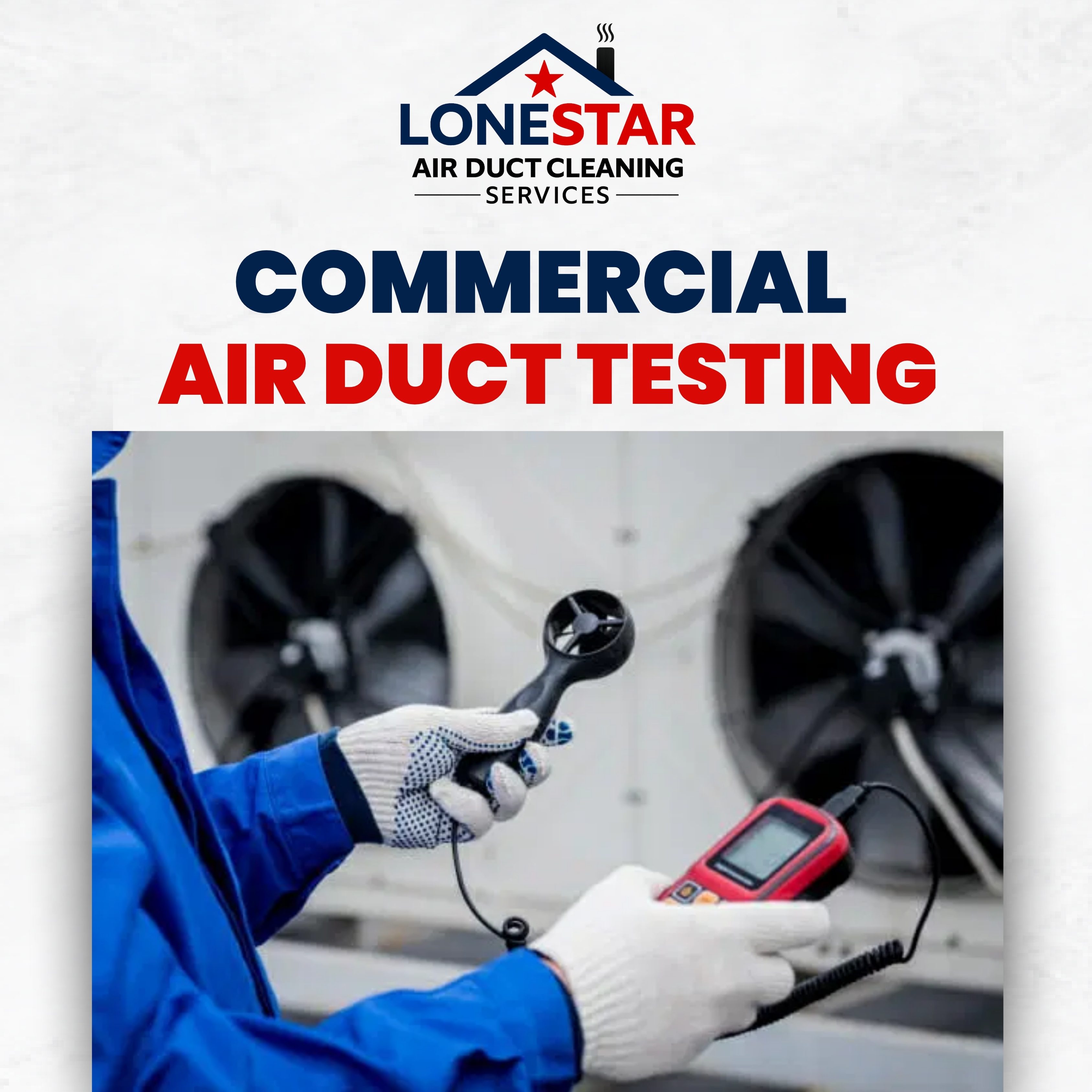
A business may schedule testing when there are ongoing comfort, dust, odor, or airflow concerns. It can also be useful before duct cleaning, after remodeling, during tenant turnover, or when a property manager needs clearer information.

  • Before a planned duct cleaning
  • After ceiling or drywall work
  • Before a new tenant opens
  • After staff report repeated comfort issues
  • When dust keeps returning around vents
  • When odors appear with HVAC use
  • When some rooms feel stale or humid
  • After water intrusion or storm related moisture concerns
  • When older ductwork has not been checked in years

For scheduling, use Contact Us or call (830) 430-1849. If the issue comes and goes, write down when it happens. Morning, afternoon, after rain, after the AC starts, during busy hours, or after doors stay open can all be useful details.

Practical next steps after testing

After testing, next steps depend on what is found. Some buildings may need duct cleaning. Some may need filter changes or better vent access. Others may need a mechanical contractor to inspect equipment, dampers, refrigerant, controls, or duct repair needs.

  • Schedule air duct cleaning if buildup is present
  • Replace or adjust filters if fit or loading is poor
  • Clear blocked vents and returns
  • Review duct access for future cleaning
  • Have an HVAC contractor inspect mechanical concerns
  • Address moisture sources near ductwork
  • Improve return air paths where practical
  • Check space layout changes that affect airflow
  • Keep findings on file for maintenance planning

A simple change can sometimes make a real difference, such as moving boxes away from a return grille. Other issues need more work. Testing helps sort small fixes from concerns that need deeper review.

Related services in Oyster Creek, Texas

Schedule commercial air duct testing in Oyster Creek

If your Oyster Creek business is dealing with dust, odors, weak airflow, or uneven comfort, Lone Star Air Duct Cleaning Services can help check what is going on inside the duct system. Call (830) 430-1849 to schedule testing or talk through the concerns at your property.

Frequently Asked Questions (FAQs)

Commercial air duct testing is an evaluation of a building’s HVAC air distribution system to help identify airflow issues, potential contamination concerns, or performance irregularities. Local businesses often request it to support indoor air quality goals and routine facility maintenance.

Frequency depends on building use, occupancy, and maintenance plans. Many facilities consider testing during regular HVAC checkups, after renovations, or when indoor air quality concerns come up.

Common indicators include uneven temperatures, persistent dust, unusual odors, occupant comfort complaints, or HVAC performance concerns. Testing can help guide next steps without assuming a specific cause.

Testing can provide general insight into airflow and possible contributors within the duct system. It’s often used as part of a broader indoor air quality approach that may include filtration, housekeeping, and HVAC maintenance.

It’s typically planned to reduce disruption, and many businesses schedule it during off-hours or low-traffic periods. The exact impact varies by building layout and access to HVAC components.

Offices, retail spaces, medical and dental facilities, restaurants, warehouses, and multi-tenant buildings may all consider testing depending on their HVAC setup and indoor air quality priorities.

No. Testing is a way to assess conditions and performance, while cleaning is a separate service that may be recommended based on findings and overall maintenance goals.

It helps to provide access to mechanical rooms, rooftop units (if applicable), and key HVAC areas, and to share any recent maintenance notes or specific concerns from occupants.

Lone Star Air Duct Cleaning Services offers a range of services including Commercial Air Duct Testing, along with other HVAC-related duct services that businesses may use as part of routine maintenance.

Depending on the facility’s needs, related options may include duct cleaning, vent inspections, filter guidance, and general HVAC system upkeep. Lone Star Air Duct Cleaning Services offers a range of services including Commercial Air Duct Testing and related duct services.

What Is Duct Leakage Testing, and When Is It Worth Scheduling?

What Is Duct Leakage Testing, and When Is It Worth Scheduling?

Duct leakage testing measures how much heated or cooled air escapes from ductwork. It can…

Air Duct Repair vs Replacement for Aging Ductwork

Air Duct Repair vs Replacement for Aging Ductwork

Compare air duct repair and replacement by looking at the damage, leakage, insulation, moisture, airflow,…

Why Does My House Get Dusty Right After I Clean? Duct Questions to Consider

Why Does My House Get Dusty Right After I Clean? Duct Questions to Consider

Dust that returns fast may come from filter gaps, leaks, recent work, or duct debris.…