Commercial Air Duct Testing In Santa Fe

Commercial Air Duct Testing In Santa Fe by Lone Star Air Duct Cleaning Services helps improve indoor air quality with accurate results and clear reports

Table of Contents

Commercial Air Duct Testing In Santa Fe

Commercial Air Duct Testing in Santa Fe, Texas

Commercial Air Duct Testing in Santa Fe, Texas helps business owners, property managers, and facility teams understand what is happening inside their duct system. Lone Star Air Duct Cleaning Services checks duct condition, airflow concerns, visible buildup, odor sources, and other signs that may affect indoor air quality.

This service helps offices, shops, medical spaces, restaurants, schools, warehouses, churches, and mixed use buildings in the Santa Fe area. You can expect a practical visit, clear communication, and findings that help you decide what steps make sense next.

Need Help? Call Lone Star Air Duct Cleaning Services near you

What commercial air duct testing includes

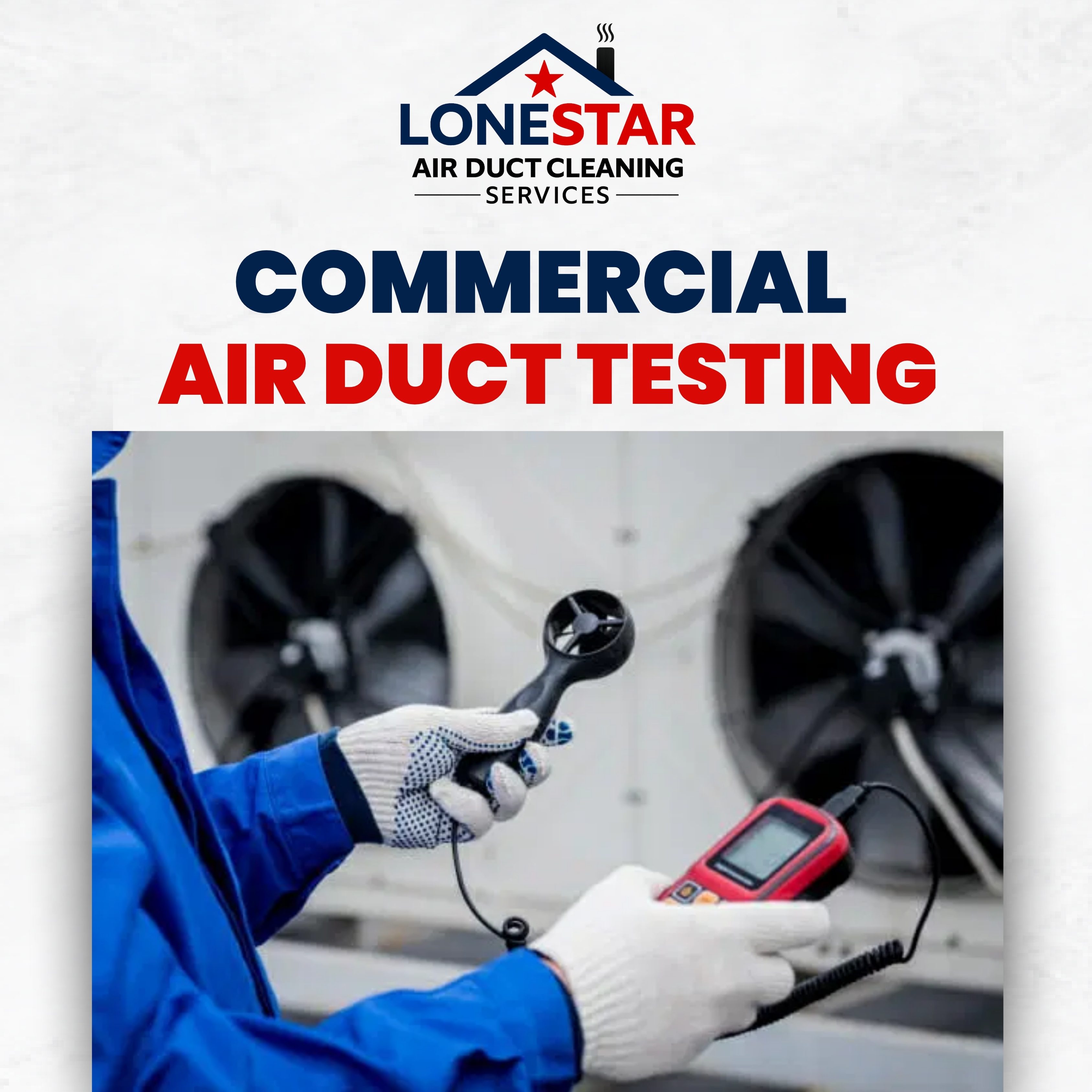
Commercial Air Duct Testing checks the condition and performance of ductwork in a business or public building. It is not just a quick look into a vent. A testing visit uses observation, practical tools, and plain explanations to review what can be accessed safely.

  • Airflow at supply and return vents
  • Dust and debris inside accessible duct sections
  • Odor concerns near vents or returns
  • Signs of moisture or staining
  • Filter fit and condition
  • Duct access points
  • Possible leakage indicators
  • Uneven airflow from room to room
  • Conditions around air handlers and returns

The goal is useful information. A small retail shop near FM 1764 may have different concerns than a warehouse closer to Highway 6. A church near Santa Fe High School may have long duct runs and rooms used only on certain days. Testing helps separate guesswork from actual observations.

lone star air duct cleaning services logo

Who uses this service in Santa Fe

Santa Fe has local businesses, service shops, churches, schools, offices, barns converted for business use, and light industrial spaces. Many buildings have additions made over time, which can make duct systems harder to read. When dust, odor, or comfort issues keep returning, testing can help focus the next step.

  • Property managers checking tenant comfort complaints
  • Business owners dealing with dust around vents
  • Office managers noticing stale air in meeting rooms
  • Restaurants tracking odor movement
  • Medical and wellness offices watching indoor air conditions
  • Churches and event spaces with seasonal use
  • Warehouses with office buildouts
  • Retail stores with uneven temperatures
  • Schools and daycare spaces reviewing HVAC related concerns

If testing shows visible buildup, Commercial Air Duct Cleaning in Santa Fe, Texas may be the next discussion. If damaged duct sections are found, Commercial Air Duct Repair in Santa Fe, Texas may be more appropriate.

What happens during a testing visit

A typical visit starts with a short conversation. We ask what you have noticed, where it happens, when it happens, and how long it has been going on. Then the building layout and HVAC setup are reviewed. In Santa Fe, that may mean a storefront along Highway 6, an office near FM 646, or a metal building with a front office and shop area in the back.

  • Walk the space with your point of contact
  • Review supply vents, return vents, and accessible duct areas
  • Check airflow concerns in rooms you identify
  • Look for dust buildup, debris, staining, or moisture signs
  • Check filter access and fit where available
  • Review air handler areas when accessible
  • Take notes and photos where helpful
  • Explain findings in plain language

If the review points to ongoing upkeep needs, Commercial Air Duct Maintenance in Santa Fe, Texas can help support future planning. If the duct layout no longer matches how the building is used, Commercial Air Duct Installation in Santa Fe, Texas may be part of a later conversation.

Need Help? Call us for Air Ducts, Dryer Vents and more!

Problems air duct testing can help identify

Air duct testing can point out conditions that may affect comfort, air movement, odor, and visible dust. It does not replace every building inspection, and it does not diagnose every HVAC mechanical issue. It gives a focused look at the duct system and related airflow concerns.

  • Dust buildup inside accessible duct areas
  • Loose or damaged duct sections
  • Blocked or restricted airflow at vents
  • Poor return air conditions
  • Moisture signs near vents, ducts, or units
  • Musty odor patterns
  • Construction debris left in duct areas
  • Dirty or poorly fitted filters
  • Duct sections affected by pests
  • Rooms with weak supply airflow

A Santa Fe office may add new rooms inside a larger open area. The walls may go up while the airflow layout stays the same. The front room may feel fine while the new back office feels stuffy by mid afternoon. Testing can document those observations so the owner has a clearer next step.

Why Santa Fe businesses schedule testing

Santa Fe is close to open land, coastal air, farm roads, construction activity, and Gulf Coast humidity. That mix can be rough on indoor spaces. Local buildings may deal with dust from nearby roads, pollen during seasonal swings, humidity after storms, odors from work bays, and older duct systems in long used buildings.

Along FM 1764, Highway 6, and the roads heading toward Alvin, Hitchcock, and Dickinson, businesses often have a blend of office space, customer areas, and work zones. Air moves where pressure and pathways allow it to move, not always where the floor plan suggests it should.

If duct sections are worn or no longer practical to service, Commercial Air Duct Replacement in Santa Fe, Texas may be reviewed. If hot attic areas are affecting comfort, Commercial Attic Insulation in Santa Fe, Texas may also be relevant for some buildings.

How testing supports indoor air quality planning

Indoor air quality is affected by many things. Duct condition is one piece of the puzzle. Building habits, HVAC maintenance, filters, moisture control, occupancy, cleaning routines, and outside air all play a role.

  • Cleaning needs
  • Maintenance priorities
  • Tenant comfort discussions
  • Odor source reviews
  • Post construction cleanup checks
  • Building turnover reviews
  • Seasonal readiness
  • Airflow balancing conversations with HVAC teams

A salon may notice dust near supply vents soon after cleaning. A small medical office may notice stale air in exam rooms when doors stay closed. A church may only run HVAC hard on weekends, then notice a musty odor on Sunday morning. Testing does not wave a magic wand, but it can help stop the guessing.

Types of commercial buildings that can be tested

Lone Star Air Duct Cleaning Services works with many commercial settings in and near Santa Fe. Each building has its own use pattern, and that matters when duct concerns are reviewed.

  • Offices
  • Retail stores
  • Restaurants and cafes
  • Dental and medical offices
  • Veterinary offices
  • Churches
  • Daycare centers
  • Schools
  • Fitness spaces
  • Warehouses with offices
  • Auto service offices
  • Storage facilities with conditioned areas
  • Municipal or community buildings
  • Event spaces
  • Multi tenant commercial suites

A warehouse office near an overhead door may collect dust faster than a quiet bookkeeping office. A restaurant may have odor questions that a retail store never faces. A daycare may care more about comfort in small rooms during nap time. Same service, different building story.

Lone Star Air Duct Cleaning Services

When a business should consider testing

You do not need to wait until a problem becomes a major headache. Many businesses call when they notice a pattern and want a clear review before choosing the next step.

  • Dust returning quickly after cleaning
  • Musty or stale odors when HVAC starts
  • Uneven comfort between rooms
  • Complaints from staff or tenants
  • Weak airflow at certain vents
  • Recent remodeling or construction
  • A building that sat unused for a while
  • Visible debris at registers
  • Water stains near vents
  • Changes after a storm or roof issue
  • Unknown duct condition in a newly leased space

If several people keep pointing at the same room and saying something feels off, it is worth looking into. For businesses that also manage laundry airflow, Commercial Dryer Vent Booster Fan Installation in Santa Fe, Texas may be useful to review as a separate concern.

Areas of the duct system reviewed

Commercial buildings can have ductwork above ceiling tiles, in attic spaces, inside chases, on rooftops, or above open ceilings. Access varies from building to building, so the visit focuses on areas that can be reviewed safely and practically.

  • Supply registers
  • Return grilles
  • Duct interiors where accessible
  • Main trunk lines where visible
  • Flexible duct sections
  • Sheet metal duct sections
  • Air handler connections
  • Filter racks
  • Plenum areas where accessible
  • Areas near rooftop or split system equipment
  • Ceiling spaces tied to duct concerns

The duct system does not live alone. It shares space with insulation, ceiling cavities, electrical lines, plumbing, roof penetrations, and storage areas. A duct may look clean while a nearby moisture source, damaged ceiling tile, open return path, or dusty storage area still affects what people notice indoors.

Factors that affect results and timing

Factor Why it matters
Building size Larger buildings may require more time to review
Number of HVAC systems More systems mean more vents, returns, and equipment areas
Duct access Limited access can affect what can be observed
Recent weather Humidity and storms can change odor and moisture conditions
Occupied areas Staff, customers, and tenants may affect the visit schedule

Santa Fe weather can play a role. A humid morning after a Gulf storm front may create different odor conditions than a dry afternoon. A building near open fields may show more dust during windy stretches. We keep the process practical and communicate what can be reviewed during the visit.

How to prepare before testing

A little preparation helps the visit move smoothly. You do not need to turn the building upside down. Just help the technician reach the areas that matter.

  • Make a list of rooms with concerns
  • Note when odors or airflow issues happen
  • Clear access to vents where possible
  • Check that mechanical rooms can be opened
  • Have someone available who knows the building
  • Share any recent remodel or roof leak history
  • Point out tenant areas that need special handling
  • Let staff know someone may be checking vents
  • Avoid blocking returns with boxes or furniture

If your office manager says the conference room gets strange after lunch, write that down. Small details can help connect the dots. Timing matters too, since some odors appear after rain, some airflow issues show up when rooms are full, and some dust concerns appear after warehouse doors are opened.

What you receive after testing

After testing, Lone Star Air Duct Cleaning Services explains what was found in a way that is easy to follow. The goal is not to bury you in technical language. The goal is to help you understand what was observed.

  • Areas reviewed
  • Visible duct conditions
  • Airflow concerns noted
  • Dust or debris observations
  • Odor related observations
  • Moisture or staining signs
  • Filter and return observations
  • Photos when useful
  • Practical next step options

The next step may be cleaning, HVAC service, moisture review, filter changes, duct repair, or another building related action. Clear findings help property owners, tenants, maintenance teams, and HVAC contractors talk about the same observations instead of guessing from different corners of the room.

Testing compared with cleaning

Testing and cleaning are related, but they are not the same service. Testing checks conditions and helps identify concerns. Cleaning removes dust, debris, and buildup from duct areas when cleaning is the right next step.

Service Main purpose When it helps
Air duct testing Review duct condition and airflow concerns When you need to understand what is happening
Air duct cleaning Remove buildup from ductwork and related components When testing or visible conditions show cleaning is needed

Some businesses call for cleaning first. Others prefer testing before deciding. If a Santa Fe property has visible debris at vents, recent construction dust, and staff complaints, testing can help confirm the scope before another service is scheduled.

Why local building use matters

How a building is used affects the duct system. A quiet office, a busy shop, and a church hall do not create the same indoor conditions. In Santa Fe, many commercial spaces have mixed use, with a front office connected to a garage, storage bay, classroom, or event room.

  • A farm supply office with dust near returns
  • A daycare with closed classroom doors and uneven airflow
  • A metal shop office where air feels stale in the afternoon
  • A retail store with ceiling tile stains near vents
  • A church fellowship hall used heavily on weekends
  • A restaurant with odor movement between rooms
  • A real estate office in an older converted house
  • A warehouse suite with long duct runs and weak airflow at the end

Testing considers these real use patterns. A building that sits quiet all week and fills up on Saturday has different needs than a shop running five days a week with doors opening all day.

What property managers and owners should know

Property managers often need clear information without drama. Tenant comfort issues can turn into long email chains fast. Air duct testing gives a grounded way to review dust complaints, odor complaints, move in concerns, move out checks, shared return areas, and altered layouts.

Business owners already have schedules, customers, deliveries, repairs, payroll, and building issues to manage. Air duct concerns are not always urgent, but they can affect daily comfort. Testing may be useful if staff keep reporting the same room, customers notice odors, dust collects quickly, or the building has older ductwork.

The team at About Us explains the company focus on practical air duct and dryer vent cleaning services from Houston, TX. For Santa Fe businesses, the work centers on clear communication, respectful service inside occupied spaces, and findings that are easy to discuss.

Scheduling commercial air duct testing in Santa Fe

If your business is dealing with dust, odor, weak airflow, recent remodeling, or unknown duct conditions, testing can help you get a clearer picture. To ask about scheduling, use the Contact Us page or call (830) 430-1849.

Service requests commonly come from 77510 and nearby areas tied to Santa Fe business activity. Nearby ZIP codes may include 77517, 77511, 77539, 77563, 77568, and 77573 depending on the property location and scheduling.

You can also review the main Service areas page or the Santa Fe, Texas service areas page to learn more about local availability.

Related services in Santa Fe, Texas

Frequently Asked Questions (FAQs)

Commercial air duct testing is an evaluation of airflow and duct conditions to help identify potential issues that may affect indoor comfort and system performance. Many local businesses request it as part of routine maintenance or when investigating air quality concerns.

Offices, retail spaces, warehouses, medical facilities, restaurants, and multi-tenant properties may all consider air duct testing, especially where consistent ventilation and occupant comfort are important.

It’s commonly scheduled during planned maintenance, after renovations, when occupancy changes, or if you notice uneven temperatures, persistent odors, or ventilation concerns.

The process generally includes reviewing HVAC and duct access points, taking basic airflow or pressure-related readings where applicable, and noting visible conditions that may warrant further attention.

Many businesses plan testing during off-hours or low-traffic periods. The level of disruption depends on building layout, access to mechanical areas, and any safety requirements on-site.

Some businesses still choose periodic testing to establish a baseline and support preventive maintenance, even when there are no obvious problems.

Testing can help identify ventilation imbalances or duct-related factors that may contribute to comfort or air quality complaints, and it can guide next steps such as maintenance or cleaning.

Testing focuses on evaluating airflow and duct system conditions, while cleaning focuses on removing accumulated debris from ductwork and related components. They’re often considered complementary services.

Yes, many property managers and business owners consider testing after renovations to check ventilation performance and verify that the duct system is functioning as expected.

Lone Star Air Duct Cleaning Services offers a range of services including Commercial Air Duct Testing, along with other duct and ventilation-related services that businesses may consider as part of facility upkeep.

What Is Duct Leakage Testing, and When Is It Worth Scheduling?

What Is Duct Leakage Testing, and When Is It Worth Scheduling?

Duct leakage testing measures how much heated or cooled air escapes from ductwork. It can…

Air Duct Repair vs Replacement for Aging Ductwork

Air Duct Repair vs Replacement for Aging Ductwork

Compare air duct repair and replacement by looking at the damage, leakage, insulation, moisture, airflow,…

Why Does My House Get Dusty Right After I Clean? Duct Questions to Consider

Why Does My House Get Dusty Right After I Clean? Duct Questions to Consider

Dust that returns fast may come from filter gaps, leaks, recent work, or duct debris.…