Commercial Air Duct Testing In Bacliff

Book Commercial Air Duct Testing In Bacliff with Lone Star Air Duct Cleaning Services for reliable reports, safer air, and improved HVAC performance today

Table of Contents

Commercial Air Duct Testing In Bacliff

Commercial Air Duct Testing in Bacliff, Texas

Commercial Air Duct Testing in Bacliff, Texas is a practical inspection and testing service for business HVAC duct systems. It helps property managers, building owners, restaurants, clinics, retail shops, offices, churches, and light industrial spaces understand what may be happening inside the ductwork.

With Lone Star Air Duct Cleaning Services, you can expect a clear walkthrough, targeted testing, photo documentation when access allows, and plain spoken findings. We look at airflow, visible buildup, moisture clues, odor concerns, and system conditions that may affect indoor air movement.

Need Help? Call Lone Star Air Duct Cleaning Services near you

What commercial air duct testing checks

Commercial air duct testing looks at how air moves through your building and what conditions may be affecting that movement. The goal is to identify signs that point to duct buildup, leakage, poor balance, moisture, restricted returns, or contamination concerns. If testing shows cleaning may be needed, Commercial Air Duct Cleaning in Bacliff, Texas may be the next step.

A typical visit may include checks of these areas.

  • Supply vents and return grilles
  • Main duct runs where access is available
  • Rooftop units and indoor air handlers
  • Airflow at selected vents
  • Dust and debris patterns
  • Odor sources near returns or intakes
  • Moisture stains or condensation clues
  • Filter fit and filter condition
  • Access panels and duct connections
  • Areas with repeated comfort complaints

Testing is not the same as cleaning. Testing helps show what may need attention before work starts. That can save a lot of confusion when the issue might be ductwork, layout, filters, or equipment.

A small office near FM 646 may call because the back rooms feel stuffy. A seafood spot closer to Galveston Bay may call because odors seem to travel from one side of the building to the other. A daycare may call after staff notice dusty vents in rooms used every day. Each situation needs a different look.

lone star air duct cleaning services logo

Who uses commercial air duct testing in Bacliff

Bacliff has a mix of bay area businesses, small commercial buildings, food service spaces, rentals, churches, workshops, and offices. Many buildings have been changed over time. A former retail space may now be a clinic. A small office may have added walls. A restaurant may have upgraded kitchen equipment while the duct layout stayed the same.

Commercial air duct testing in Bacliff is a fit for these properties.

  • Property managers checking tenant complaints
  • Business owners planning duct cleaning
  • Restaurants dealing with odors or uneven comfort
  • Medical and dental offices with indoor air concerns
  • Daycare and learning centers with frequent dust complaints
  • Churches and meeting halls used on weekends
  • Retail shops in strip centers
  • Marina offices and bayfront service businesses
  • Warehouses with office buildouts
  • Mixed use properties with shared HVAC concerns

A common call sounds like the lobby feels fine, but the office by the storage room never cools down. That can be a duct issue, a blocked return, a closed damper, an equipment issue, or a layout problem. Testing helps narrow the field before anyone starts pointing at the thermostat.

If testing finds damaged duct sections or poor connections, Commercial Air Duct Repair in Bacliff, Texas may be worth discussing. If the layout no longer fits the way the business uses the space, Commercial Air Duct Installation in Bacliff, Texas may also be relevant.

Why test commercial air ducts before cleaning

Testing before cleaning gives you a clearer picture of what is going on. Not every complaint means the ducts need cleaning. Not every dirty vent means the whole duct system has the same condition.

Testing can help answer these questions.

  • Is airflow weak in one area or across the building
  • Are returns pulling air the way they should
  • Is dust coming from ducts, ceiling spaces, filters, or foot traffic
  • Are odors tied to the HVAC system or another source
  • Is there visible debris inside accessible duct sections
  • Are there signs of moisture that should be checked
  • Are access points available for future service

Think of it like checking the map before a road trip. Nobody wants to drive in circles around Highway 146 when the turn was back on FM 646. Testing helps reduce guesswork.

For businesses with employees, customers, patients, students, or tenants, this matters. Comfort complaints can pull attention away from daily work. A short, focused test can help your team decide the next step without turning the building upside down. For ongoing care after the testing visit, Commercial Air Duct Maintenance in Bacliff, Texas may help keep future concerns easier to track.

Need Help? Call us for Air Ducts, Dryer Vents and more!

What happens during a commercial air duct testing visit

The visit starts with a conversation. We ask what you are noticing, where it happens, when it happens, and whether it changes during the day. A morning odor may point to one issue. A late afternoon hot spot may point somewhere else.

After that, we walk the space. We look at the layout, HVAC equipment locations, vent placement, returns, ceiling access, and any areas you want checked first.

A typical process may include these steps.

  • Review the concern with your onsite contact
  • Walk the building and note affected rooms
  • Check supply vents and return grilles
  • Look for dust patterns, staining, and blocked airflow
  • Inspect accessible duct areas when safe and reachable
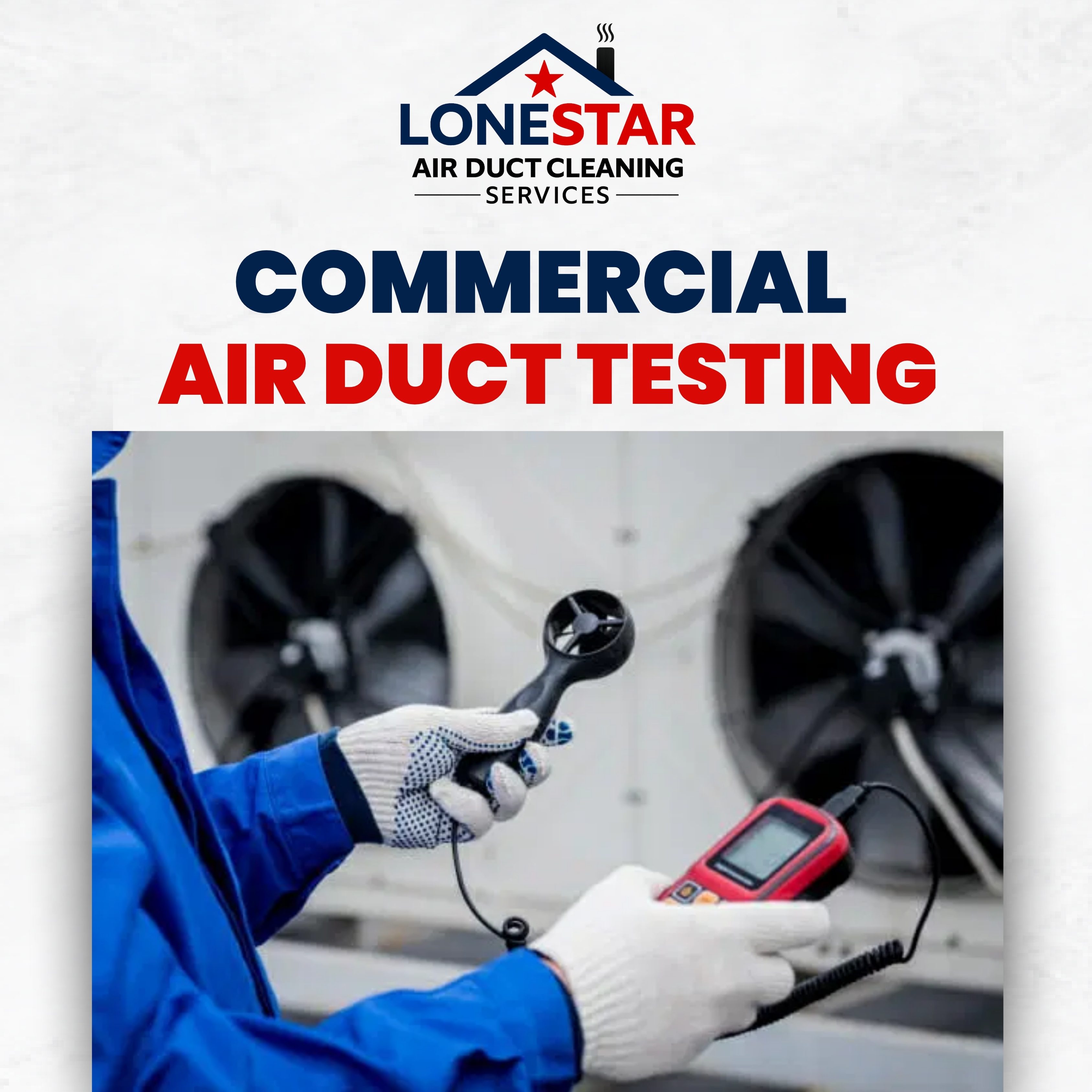
  • Take airflow readings at selected locations when needed
  • Look at filter fit and air handler conditions
  • Document visible concerns
  • Explain findings in plain language
  • Discuss possible next steps based on what was found

We keep the process practical. If a vent is hidden behind a shelf full of paper towels, we will let you know. If a return is pulling air from a storage room with cleaning products, we will point that out too. Sometimes the duct problem is a storage problem wearing a fake mustache.

Signs that point to a need for testing

Some signs are easy to notice. Others show up as repeat complaints that never seem to stay fixed. A Bacliff retail shop near Grand Avenue may see dust collect around ceiling vents after busy weekends. A small clinic near Bayshore Park may notice one exam room has weaker airflow than the rest. A church hall may smell musty after long closed periods between events.

What you notice What testing may look at
Uneven cooling or heating Airflow, dampers, restrictions, return placement
Dust around vents Duct condition, filter fit, nearby ceiling dust
Musty odor Moisture clues, drain issues, return air paths
Odors moving between rooms Pressure balance, shared returns, duct layout
Noisy vents Air restriction, loose parts, high airflow at one grille
Frequent filter loading Return leaks, dust sources, equipment conditions

These are the types of clues we use during testing. The goal is not to make a mountain out of a molehill. It is to sort out what is normal, what may need cleaning, and what may need HVAC repair by the proper trade. When aging ductwork is part of the concern, Commercial Air Duct Replacement in Bacliff, Texas may be part of the conversation.

How Bacliff’s bay area climate affects duct systems

Bacliff sits close to Galveston Bay, and coastal air can be tough on buildings. Humidity, salt air, wind driven dust, and frequent AC use all play a role. A business near the water may have different concerns than a shop farther inland near Bayview.

Local buildings may deal with these conditions.

  • Higher indoor humidity during warm months
  • Condensation near cold duct surfaces
  • Salt air exposure around rooftop units
  • Dust from nearby roads and parking areas
  • Odors from kitchens, bait shops, marinas, or dumpsters
  • More frequent AC runtime during long hot seasons
  • Storm related moisture around ceilings or mechanical rooms

A metal building with office space may heat up fast in summer, which can push the HVAC system hard. A restaurant can have more odor movement because of kitchen exhaust, makeup air, and frequent door openings. If hot attic or ceiling areas are adding to comfort issues, Commercial Attic Insulation in Bacliff, Texas may be worth reviewing.

Bacliff weather likes to keep everyone on their toes. If you have worked near the bay for long, you know the air can feel like soup by lunchtime. Duct testing helps see whether the building is moving that air well or fighting itself.

Commercial spaces in Bacliff that commonly need testing

Commercial properties in Bacliff are not all built the same. Some are older structures with add ons. Some are small tenant spaces in retail strips. Some are bay area service buildings with a mix of office, shop, and storage space.

Common places we test include these spaces.

  • Seafood restaurants and cafes
  • Bait and tackle shops
  • Boat service offices
  • Small medical offices
  • Dental offices
  • Daycare centers
  • Real estate offices
  • Insurance and professional offices
  • Churches and fellowship halls
  • Fitness studios
  • Salons and barbershops
  • Convenience stores
  • Light warehouse offices
  • Rental property common areas

Each space has its own air pattern. A salon may have product odors near returns. A restaurant may have greasy dust near ceiling tiles. A daycare may have glitter, crumbs, craft dust, and mystery fuzz that no one wants to claim. A marina office may get extra outside air every time the door swings open on a windy day.

Lone Star Air Duct Cleaning Services

Odor complaints and airflow testing

Testing can help track how odors may be moving through a commercial building. It does not always identify every odor source, but it can show whether the HVAC system may be involved.

Odor complaints in Bacliff businesses may come from these sources.

  • Kitchen areas
  • Restrooms
  • Floor drains
  • Mop sinks
  • Trash storage
  • Damp ceiling areas
  • Return air pulling from storage rooms
  • Outdoor air intakes near odor sources
  • Shared walls or ceiling cavities
  • Duct sections with visible buildup or moisture clues

We often hear that it smells fine until the AC starts. That is a useful clue. It may point to return air movement, coil area conditions, duct debris, or airflow pulling air from a nearby source. Another common concern is that only the front counter smells it. Odors can follow pressure differences, and a door opening near the bay breeze can change air paths fast.

Testing can include checking vent locations, return paths, nearby odor sources, and visible duct conditions. If the issue appears to be outside the ducts, we say so. No need to chase a rabbit down the wrong hole.

Uneven temperatures in Bacliff businesses

Uneven temperatures are one of the most common reasons businesses ask for commercial air duct testing. The front room is cool. The back office is warm. The conference room is freezing. Someone taped cardboard over a vent three summers ago, and nobody remembers who did it.

Testing can help look at these items.

  • Airflow differences between rooms
  • Closed or blocked dampers
  • Dirty or restricted grilles
  • Return air problems
  • Duct layout changes after remodels
  • Poorly placed furniture or shelving
  • Door positions that trap air
  • Ceiling tile gaps above returns
  • Equipment serving more space than it should

In Bacliff, many commercial spaces have been reused for different businesses over the years. A shop that once had open retail space may now have offices divided by new walls. Those walls can change airflow. The HVAC system may still be trying to serve the old open layout.

Dust around vents

Dust around vents can come from more than one source. It may come from duct buildup, but it may also come from room dust sticking to cool surfaces near supply vents. It may come from poor filter fit, ceiling cavities, renovation dust, or high foot traffic.

Commercial air duct testing looks for patterns. We may check these details.

  • Whether dust is inside the grille or mainly on the outside
  • Whether nearby ceiling tiles show dust trails
  • Whether filters are seated correctly
  • Whether returns are pulling from dusty areas
  • Whether duct interiors show visible buildup
  • Whether vents near doors or registers show more debris

A bait shop, small warehouse office, or retail store near a busy parking lot may bring in more outdoor dust. A daycare or church hall may create more indoor dust from daily use, paper products, carpet, and stored supplies. Do not blame the duct before checking the return grille, the filter rack, and the broom closet next door.

What can affect results and timing

Several factors can affect what we can test, how long it takes, and how clear the findings are. Commercial buildings vary a lot, even on the same road in Bacliff.

  • Building size and number of HVAC systems
  • Access to rooftop units or locked mechanical rooms
  • Ceiling height and ladder access
  • Active business hours and customer traffic
  • Blocked vents or returns
  • Recent remodeling or construction dust
  • Filter changes right before testing
  • Wet weather or high humidity
  • Equipment that is not running during the visit
  • Safety limits around electrical or roof access
  • Shared systems in multi tenant buildings

If a restaurant is in the lunch rush, some areas may need to wait. If a retail shop has shelves under every vent, access may take longer. If a storm rolled through Bacliff the night before, moisture concerns may be easier to see in some areas, but roof access may need care.

We explain these factors during the visit. Some tests are quick. Some need more time because the building has more systems, more rooms, or limited access. We avoid hard claims before seeing the space because buildings like to keep secrets.

How to prepare for duct testing

A little preparation helps the visit move smoothly. You do not need to stop all work unless access or safety calls for it. Most visits can be planned around normal business activity.

Helpful steps include these items.

  • Pick one onsite contact who knows the concern
  • Make a list of rooms with complaints
  • Note when the issue happens
  • Clear access to key vents and returns
  • Have keys ready for mechanical rooms
  • Provide roof access if rooftop units need review
  • Share any recent HVAC work or remodeling
  • Let staff know we may be checking vents
  • Avoid moving filters right before the visit unless needed for normal operation

Small notes help a lot. The smell happens after rain is useful. The back office gets warm after 2 p.m. is useful. The vent over the desk rains dust when the AC starts is very useful, though nobody loves hearing that one.

If your Bacliff business has more than one tenant, it also helps to know which areas share equipment. Shared systems can make complaints harder to track without access to more than one space.

What you receive after testing

After the testing visit, Lone Star Air Duct Cleaning Services explains the findings in clear language. The goal is to help you understand what was checked, what was seen, and what may be worth addressing.

Depending on the visit, documentation may include these details.

  • Notes on areas inspected
  • Photos where access allows
  • Airflow readings from selected vents when taken
  • Visible duct condition notes
  • Filter and return observations
  • Moisture or odor clues
  • Access limitations
  • Practical next step options

The report is meant for decision making. It can help a property manager talk with a tenant. It can help a business owner plan cleaning. It can help separate duct cleaning needs from HVAC repair needs. If something appears outside duct cleaning work, we will tell you.

Business hour access and disruption

Most testing is not loud or messy. We may need to access vents, returns, ceiling areas, air handlers, or rooftop units. Some areas may need a ladder. Some rooms may need a few minutes of space.

For active businesses, we try to work in a way that respects the workday. A clinic may need testing room by room. A restaurant may want certain checks before opening or between rush periods. A retail shop may prefer that we avoid blocking customer paths.

  • Starting with the problem areas
  • Working around high traffic zones
  • Checking accessible vents first
  • Coordinating with the onsite contact
  • Keeping tools organized
  • Explaining when a room is needed briefly

We know Bacliff businesses have work to do. Nobody wants an inspection to turn into a three ring circus. We keep it simple and practical.

How commercial testing differs from residential testing

Commercial systems often serve larger spaces, more people, and more varied activities than homes. A business may have rooftop units, shared returns, multiple thermostats, commercial filters, longer duct runs, and more access limits.

Commercial testing may involve these conditions.

  • Multiple HVAC units
  • Larger duct sections
  • More supply and return points
  • Customer or employee occupied areas
  • Tenant boundaries
  • Higher ventilation needs
  • Odor sources tied to business use
  • Roof or ceiling access
  • Scheduling around operations

In Bacliff, a commercial space may also face bay air, restaurant exhaust, parking lot dust, and frequent door openings. That changes how we look at the system. A home usually has a more familiar layout. A commercial space can have hidden changes from years of tenant improvements.

Service area and nearby ZIP codes

Lone Star Air Duct Cleaning Services serves Bacliff and nearby bay area communities from Houston, TX. ZIP codes commonly associated with this local service area include 77518, 77565, 77573, 77539, 77510, 77590, 77591, and 77568.

These ZIP codes cover Bacliff, Kemah, League City, Dickinson, Santa Fe, Texas City, La Marque, and nearby bay area routes. If your business is near FM 646, Highway 146, Grand Avenue, Bayshore Drive, or close to the San Leon and Bayview area, we can talk through location and service access. You can also review Bacliff, Texas service areas for local service information.

Why work with Lone Star Air Duct Cleaning Services

Lone Star Air Duct Cleaning Services works with commercial properties that need clear answers before taking the next step. The team is based in Houston and serves Bacliff businesses with air duct and dryer vent cleaning related services, including commercial air duct testing. To learn more about the company, visit About Us.

Our approach is straightforward.

  • We listen first
  • We inspect what we can access
  • We explain what we find
  • We avoid scare talk
  • We keep the conversation useful

If testing points toward cleaning, we can explain what that may involve. If testing points toward an HVAC repair issue, we can say that too. The point is to help you make a sound decision for your building.

Related services in Bacliff, Texas

Schedule commercial air duct testing in Bacliff

If your Bacliff business has dust concerns, uneven airflow, odor complaints, or questions about duct condition, Contact Us to schedule service with Lone Star Air Duct Cleaning Services.

Call (830) 430-1849 to schedule commercial air duct testing in Bacliff. We will talk through your building, your concerns, and what to expect during the visit.

Frequently Asked Questions (FAQs)

Commercial air duct testing is an evaluation of airflow and duct conditions to help identify potential issues that may affect indoor air movement and comfort. Businesses in Bacliff often request it as part of routine maintenance or when investigating air quality or HVAC performance concerns.

It’s commonly considered during seasonal HVAC checkups, after renovations, when moving into a new commercial space, or if occupants notice persistent dust, uneven airflow, or musty odors.

Many building types can benefit, including offices, retail spaces, restaurants, medical facilities, warehouses, and multi-tenant properties, especially where consistent airflow and ventilation are important.

It can often be planned to minimize disruption, such as scheduling around business hours or working in phases, depending on the building layout and access to ductwork.

It generally involves inspecting accessible duct components and checking airflow-related indicators to help assess ventilation performance. The exact steps vary by building and HVAC configuration.

No. Testing focuses on evaluating duct and airflow conditions, while cleaning addresses dust and debris buildup. Many businesses use testing to help decide whether additional services may be helpful.

It may help identify airflow imbalances or duct-related factors that can contribute to uneven heating or cooling, though temperature issues can also involve equipment settings, insulation, or building design.

Frequency varies by building use, occupancy, and maintenance practices. In coastal areas, some businesses choose to review ventilation and duct conditions periodically as part of ongoing HVAC upkeep.

Lone Star Air Duct Cleaning Services offers a range of services, including Commercial Air Duct Testing, along with other related air duct and ventilation support options for local businesses.

It helps to ensure access to HVAC rooms, duct access points, and key areas of the building, and to share any concerns (like specific rooms with weak airflow) so the visit can focus on relevant areas.

What Is Duct Leakage Testing, and When Is It Worth Scheduling?

What Is Duct Leakage Testing, and When Is It Worth Scheduling?

Duct leakage testing measures how much heated or cooled air escapes from ductwork. It can…

Air Duct Repair vs Replacement for Aging Ductwork

Air Duct Repair vs Replacement for Aging Ductwork

Compare air duct repair and replacement by looking at the damage, leakage, insulation, moisture, airflow,…

Why Does My House Get Dusty Right After I Clean? Duct Questions to Consider

Why Does My House Get Dusty Right After I Clean? Duct Questions to Consider

Dust that returns fast may come from filter gaps, leaks, recent work, or duct debris.…