
Commercial Air Duct Testing In Beaumont
Commercial Air Duct Testing In Beaumont by Lone Star Air Duct Cleaning Services helps improve indoor air quality with clear reports and expert guidance
Table of Contents
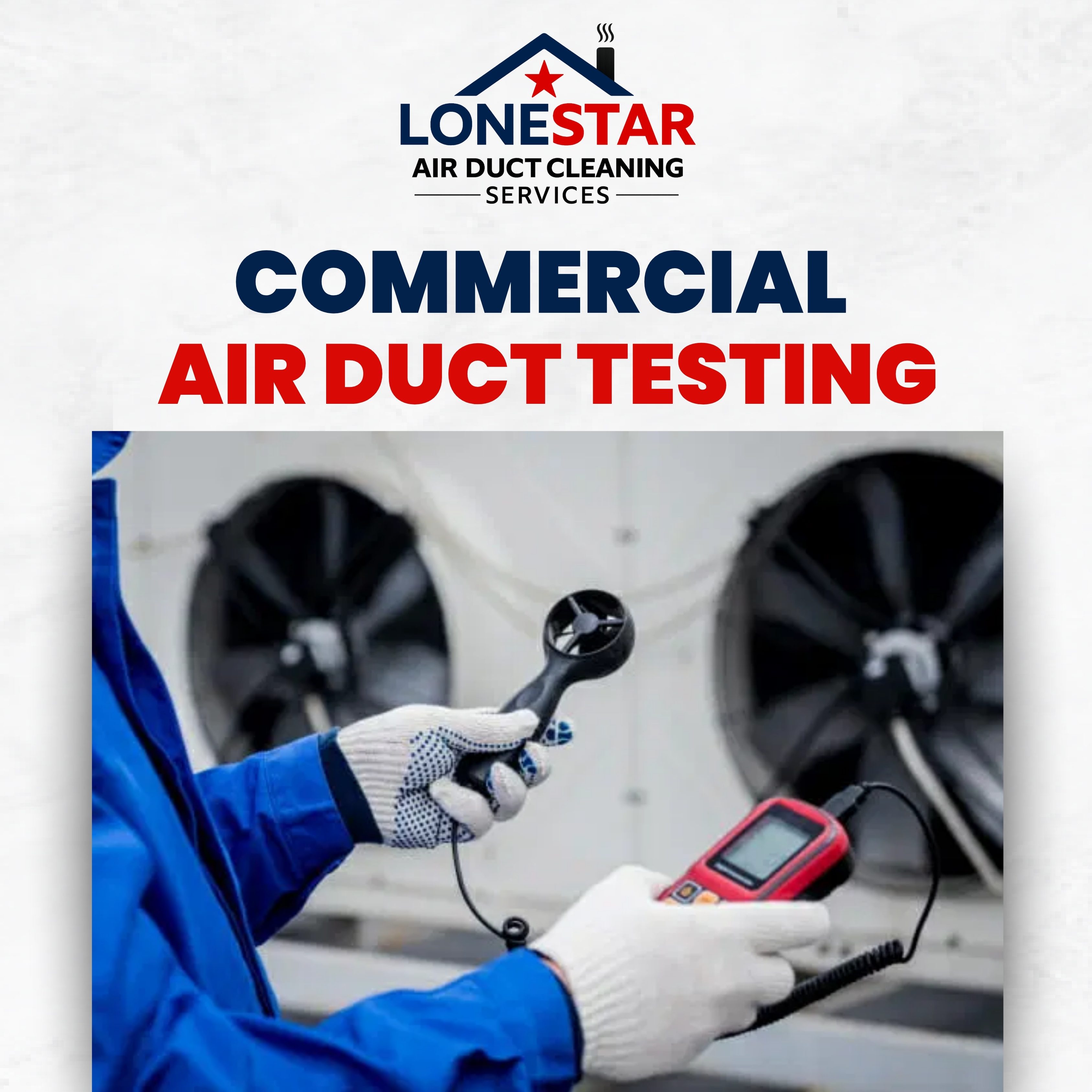
Commercial Air Duct Testing in Beaumont, Texas
Commercial Air Duct Testing in Beaumont, Texas helps business owners, facility managers, and property teams understand what is happening inside a commercial duct system. Lone Star Air Duct Cleaning Services checks airflow concerns, visible duct conditions, access points, dust buildup signs, and other factors that may affect indoor air quality.
You can expect a practical visit, clear notes, and guidance that fits your building. We look at the system as it sits in the real world, whether that is a medical office near Calder Avenue, a warehouse off I-10, a retail space near Dowlen Road, or a school facility near Lamar University.
Need Help? Call Lone Star Air Duct Cleaning Services near you
What Commercial Air Duct Testing Includes
Commercial Air Duct Testing is a structured look at the duct system and related airflow conditions in a business space. It is not guesswork. It is more than a quick look at a vent and a dusty guess.
Our team checks the areas that affect how air moves through your building. This may include supply vents, return vents, duct access points, mechanical room conditions, and visible signs of dust, debris, moisture, or loose material. If the findings point toward cleaning, Commercial Air Duct Cleaning in Beaumont, Texas may be discussed as a next step.
A typical testing visit may include
- A walkthrough of the building areas being checked
- Notes about comfort complaints or air quality concerns
- Visual checks of registers, grilles, and accessible duct areas
- Airflow observations at selected vents
- Review of visible buildup around returns and supply points
- Photo notes when useful
- Practical next step guidance
Testing can help answer basic but useful questions. Is air moving evenly through the building. Are some rooms receiving weak airflow. Are return areas pulling in dust from nearby spaces. Are there visible signs of duct contamination. Are access limits getting in the way of future cleaning or maintenance.
The goal is to give you clear information before you make decisions about duct cleaning, maintenance planning, or facility repairs. If the system appears damaged or restricted, Commercial Air Duct Repair in Beaumont, Texas may also become part of the discussion.
Who Uses Commercial Air Duct Testing in Beaumont, Texas
Beaumont has many building types, and each one brings its own air quality puzzle. A small office near Old Town does not behave like a large shop near the Port of Beaumont. A restaurant near College Street has different needs than a clinic near Major Drive.
Commercial Air Duct Testing in Beaumont is used by office managers, retail property managers, restaurant owners, medical and dental office teams, school staff, warehouse operators, church facility teams, multi-tenant building managers, real estate teams, and industrial support offices.
A property manager may call because one tenant keeps noticing a musty smell near a back hallway. A clinic may notice dust collecting around ceiling vents faster than expected. A warehouse office may have airflow that feels fine in the morning, then sticky and stale by lunch. Testing helps sort out these day-to-day concerns before a team starts guessing.
Why Test Commercial Air Ducts Before Cleaning
Testing gives your team a better starting point. It helps separate duct-related issues from filter problems, building pressure concerns, moisture sources, or routine housekeeping dust. Without testing, a business may jump straight into cleaning when the issue could be tied to a clogged return, blocked vent, poor access, or construction dust from a recent buildout.
Testing can identify areas with visible debris near vents, rooms with weak airflow, return vents pulling dust from high-traffic zones, signs of moisture near duct openings, duct sections that may need access planning, and areas where occupant complaints are clustered. It can also help decide whether Commercial Air Duct Maintenance in Beaumont, Texas may be useful for ongoing building care.
A common complaint is that the front office feels fine while the conference room feels closed in and stale. That kind of detail is useful. It tells us where to look first. Testing helps connect those comments with what is happening at vents, returns, and nearby access points.
Need Help? Call us for Air Ducts, Dryer Vents and more!
Common Signs a Beaumont Business May Need Duct Testing
Commercial buildings rarely announce duct issues clearly. They usually give small clues that build over time. Beaumont weather can add to the challenge because humid Gulf Coast air, sudden rain, and long cooling seasons can make indoor air concerns more noticeable.
- Dust collecting quickly around supply vents
- Musty odors when the air system starts
- Hot and cold spots in different rooms
- Weak airflow from certain vents
- Staff complaints about stale air
- Visible debris at return grilles
- Increased dust on desks or counters
- Recent remodeling dust moving through the space
- Water stains near ceiling vents
- Odors that appear after heavy rain
After a wet week, a building near Fannett Road or Washington Boulevard may feel different than it did during a dry spell. Duct testing helps document what can be seen and checked. It also helps your team avoid chasing the wrong problem.
How Beaumont Weather Affects Commercial Duct Concerns
Beaumont has heat, humidity, storms, pollen, and long air conditioning seasons. That mix can put pressure on commercial HVAC systems. Moist air can make dust cling to surfaces. Heavy rain can expose building leaks. Pollen can load filters. Construction and road dust near I-10, Eastex Freeway, and industrial zones can move into entrances, lobbies, and return air paths.
Local conditions that may affect ducts
- High humidity during much of the year
- Heavy rain and storm events
- Pollen from trees and grasses
- Road dust near major routes
- Industrial dust near work zones
- Frequent door traffic in retail spaces
- Kitchen vapors in food service buildings
- Renovation dust in tenant finish-outs
A Beaumont office near a busy road may see more dust at entry areas. A retail space with doors opening all day may pull in more outside air. A warehouse office attached to a work area may deal with fine particles that settle near returns. Testing looks at how the building is used, not only at what the ductwork looks like in isolation.
What Happens During a Commercial Air Duct Testing Visit
A testing visit starts with a conversation. We ask what your team has noticed, where complaints are coming from, and whether there have been recent changes such as remodeling, new tenants, water leaks, HVAC repair work, filter changes, odor complaints, dust complaints, hot or cold spots, or high foot traffic.
After that, we review accessible areas. We may check vents, returns, ceiling areas, mechanical spaces, and duct openings where access is available. We document concerns in plain language so managers, owners, and tenants can understand what was observed.
A typical process
- Listen to the main concern and where it shows up
- Walk the affected rooms, halls, offices, or tenant spaces
- Review visible duct and vent conditions
- Look for dust patterns, debris, moisture clues, and airflow concerns
- Note where ducts can be checked or serviced if cleaning is later planned
- Discuss findings in direct language
- Provide guidance about cleaning, maintenance, repair review, or monitoring
Facility teams have enough on their plate without a mystery novel about ceiling dust. The purpose is to make the next step easier, whether that means monitoring, cleaning, repair review, or access planning.
Building Areas Commonly Checked
The exact areas depend on the building, access, and the concern. A strip center space near Parkdale Mall will be different from a church near South Park or an office near Downtown Beaumont. If the existing system has major access limitations, Commercial Air Duct Installation in Beaumont, Texas or system changes may need to be reviewed by the appropriate project team.
- Supply vents
- Return grilles
- Ceiling diffusers
- Duct access panels
- Mechanical rooms
- Air handler surroundings
- High complaint rooms
- Hallways with odor concerns
- Break rooms
- Restrooms near shared duct paths
- Storage rooms with limited airflow
- Tenant improvement areas
We also pay attention to the building layout. Long duct runs can affect airflow. Closed-off offices can trap stale air. Storage piled near returns can change how air moves. Even a temporary stack of boxes can become part of the problem if it blocks a return long enough.
When to Schedule Commercial Air Duct Testing
There is no single calendar rule that fits every building. Many Beaumont businesses schedule testing when something changes or when a concern keeps coming back. If you are planning work or need a visit, use our Contact Us page to ask about scheduling Commercial Air Duct Testing for your building.
| Situation | Why testing may help |
|---|---|
| After remodeling | Dust can settle in returns and vent areas |
| Before duct cleaning | Focus areas and access needs can be identified |
| After water intrusion | Moisture clues near ducts can be checked |
| During tenant turnover | Visible duct and vent conditions can be documented |
| After repeated odor complaints | Patterns and likely sources can be reviewed |
| When airflow feels uneven | Vents and affected rooms can be checked |
Testing may also be helpful during property planning. If you manage several tenant spaces along Phelan Boulevard or Calder Avenue, a duct testing visit can help you plan work by area instead of guessing.
What Can Affect Testing Results and Timing
Testing results depend on building conditions during the visit. Some concerns are easy to see. Others depend on weather, system operation, occupancy, or recent activity in the building. A small office suite may move faster than a large multi-tenant property. A warehouse office with high ceilings may need more setup time than a single-story retail space.
- Whether the HVAC system is running
- Time of day
- Outdoor humidity
- Recent rain
- Filter condition
- Access to duct areas
- Ceiling height
- Locked rooms or tenant areas
- Recent cleaning or construction
- Odors that come and go
- Equipment layout
- Safety access around mechanical areas
Clear access helps. If vents are blocked by shelving, displays, desks, or storage, the visit may take longer. If tenant spaces are occupied, we work around normal business needs where possible.
How Testing Helps With Indoor Air Quality Concerns
Air ducts are one part of indoor air quality. They are not the whole story. Testing helps your team understand whether the duct system may be part of the concern. Indoor air quality can be affected by duct dust, dirty return areas, poor filtration, moisture, building leaks, cleaning chemicals, office equipment, occupant activity, outdoor air entering the building, nearby work areas, and kitchen odors.
Commercial Air Duct Testing can help connect occupant concerns to physical clues. If staff in one wing of a building complain about dust, we check that wing and compare it with other areas. If odor is strongest near a return, we note that. If airflow is weak in a conference room, we check visible vent conditions and layout factors.
Testing does not turn every concern into a duct issue. Sometimes the duct system looks acceptable, while a nearby storage area, drain issue, or filter gap may be the bigger suspect. That is useful information for a facility team.
Beaumont Property Types That Benefit From Testing
Beaumont has a wide range of commercial buildings. Many were built in different phases, expanded over time, or repurposed as business needs changed. That can make air distribution uneven.
Medical and dental offices
Patient rooms, waiting rooms, labs, and admin spaces may have different air needs. Odor and dust complaints are taken seriously because people spend time sitting still and noticing everything. Even a small vent issue can become the talk of the waiting room.
Retail stores
Retail spaces near Dowlen Road, Parkdale Mall, and major shopping areas often deal with open doors, foot traffic, packaging dust, and changing displays. Testing can help check dust patterns near ceiling vents and returns.
Restaurants and food service spaces
Food service spaces have cooking odors, grease movement, humidity, and high occupant turnover. Duct testing can help identify whether comfort complaints are tied to building airflow or visible duct conditions.
Offices and professional buildings
Offices near Calder Avenue, Phelan Boulevard, and Downtown Beaumont may have conference rooms, private offices, copy rooms, and shared HVAC zones. Testing helps track complaints by room or zone.
Warehouses and industrial support offices
Air quality concerns in warehouse offices can be tied to dust from loading areas, open bay doors, and nearby work activity. Testing looks at the office air system and how the space connects to work zones.
Schools, daycares, and churches
These buildings often have many rooms, changing schedules, and heavy use. Testing can help facility teams understand problem areas before planning cleaning or maintenance.
Testing After Construction or Tenant Buildout
Testing can be useful after construction, remodeling, or a tenant buildout. Beaumont commercial spaces often change hands or change purpose. A former shop may become an office. A retail suite may become a clinic. A storage area may become a staff room.
Construction dust has a way of showing up where nobody invited it. It can settle around returns, collect on grilles, and move through nearby areas if the system was running during work. After a buildout, testing can check dust near supply vents, debris at return grilles, access to duct areas, rooms with weak airflow, areas affected by ceiling work, visible signs of duct disturbance, and odors from new materials.
A contractor may have cleaned up the work area, but dust can still settle above ceiling tiles or near returns. Testing helps your property team see what is visible and what may need attention. If older ductwork is no longer practical to service, Commercial Air Duct Replacement in Beaumont, Texas may need to be considered by the building team.
Testing for Odor Concerns
Odors are tricky. They can come from ducts, drains, moisture, storage areas, cleaning products, nearby kitchens, or outdoor air. Beaumont humidity can make odor complaints more common, especially after rain.
- Musty smells near vents
- Odors when the system starts
- Damp spots near ceiling diffusers
- Dust buildup at returns
- Areas where odors are strongest
- Nearby sources that may be pulled into return air
A common Beaumont scenario is a rainy Monday smell. Staff walk in after a wet weekend and notice a musty odor near one hallway or office. Testing helps check whether visible duct or vent conditions may be part of that issue. Sometimes the answer is not in the ductwork, and that still helps the building team focus in the right place.
What to Do Before a Testing Visit
A little preparation makes testing more useful. You do not need to turn your building upside down. Just gather the details your team already knows and clear access where possible.
- Which rooms have complaints
- When the concern happens
- Whether it is worse after rain
- Whether it happens only when the system runs
- Any recent repair work
- Recent filter changes
- Recent remodeling or ceiling work
- Areas with locked access
- Any tenant schedule limits
It also helps to move boxes, displays, or furniture that block grilles. If a return is hidden behind office supplies, we can still talk about it, but seeing it helps. Notes from staff are useful too, such as odor starting near the north hall in the morning or the back office feeling warmer after lunch.
What Happens After Testing
After testing, we discuss what was observed. The goal is to help you make a practical decision. Possible next steps may include duct cleaning for selected areas, full system cleaning planning, filter review, HVAC contractor review for mechanical issues, moisture source review, access planning, follow-up after repairs or construction, or routine monitoring by your facility team.
We explain findings in plain language. If visible duct dust is present, we say where. If airflow concerns are noted, we explain which areas were affected. If access is limited, we explain what blocked the view. Clear testing notes help keep the conversation organized when facility staff, owners, tenants, and managers all need the same basic facts.
How Testing Is Different From Commercial Duct Cleaning
Testing checks conditions. Cleaning removes dust and debris from the duct system and related components when that service is selected. Testing is the checkup, while cleaning is the hands-on service that may follow.
Testing may be selected when you are not sure ducts are part of the issue, need documentation before planning work, have tenant concerns, want to inspect after remodeling, need help sorting airflow complaints, or want a clearer view before scheduling cleaning.
Cleaning may be selected when visible buildup is present, duct debris is confirmed, post-construction dust needs removal, return areas show heavy dust, a maintenance plan calls for service, or testing points toward duct cleaning needs. Lone Star Air Duct Cleaning Services offers air duct and dryer vent cleaning services, and testing can help guide those services for commercial buildings in Beaumont.
Other Building Factors Often Reviewed
Some duct concerns are connected to conditions outside the duct system. For example, poor attic insulation can affect comfort in commercial spaces with ceiling heat gain. If that appears relevant, Commercial Attic Insulation in Beaumont, Texas may be part of a broader building conversation.
Dryer vent systems can also affect commercial properties such as salons, gyms, laundries, hospitality spaces, and buildings with laundry equipment. If airflow support is needed for those systems, Commercial Dryer Vent Booster Fan Installation in Beaumont, Texas may be relevant.
Local Beaumont Scenarios We Often See
Every building has a story. In Beaumont, common situations include office suites near I-10 with dust near returns, retail spaces near Dowlen Road with heavy door traffic, older buildings near Old Town with mixed duct access, medical offices near Calder Avenue with odor concerns, warehouses near the Port of Beaumont with dust migration, restaurants near College Street with comfort complaints, and churches near South Park with large rooms and uneven airflow.
The tricky part is that two rooms in the same building can behave differently. A front lobby may feel cool and clean while a back office feels stale. A conference room may be packed at noon and empty by three. Testing helps match the building’s real use with what is happening at the air outlets.
Beaumont ZIP Codes and Nearby Service Areas
Lone Star Air Duct Cleaning Services provides Commercial Air Duct Testing in Beaumont and nearby local service areas. Common Beaumont ZIP codes include 77701, 77702, 77703, 77705, 77706, 77707, 77708, 77713, and 77720.
If your business sits near Downtown Beaumont, the West End, Amelia, Pear Orchard, South Park, I-10, US 69, US 96, US 287, College Street, Calder Avenue, or Dowlen Road, we can discuss your duct testing needs. You can also review our Beaumont, Texas service areas information.
Why Choose Lone Star Air Duct Cleaning Services for Commercial Testing
Lone Star Air Duct Cleaning Services works with commercial properties that need clear, practical duct information. We focus on what can be checked, what was observed, and what steps may make sense for your building. Learn more about our company and team through our About Us page.
- We listen before we inspect
- We look at the building as it is used
- We explain findings without scare tactics
- We respect business hours and occupied spaces
- We keep notes clear for managers and owners
- We help connect testing with possible cleaning needs
We are based in Houston and serve Beaumont businesses that need air duct and dryer vent cleaning services. Our team understands Gulf Coast building conditions, long cooling seasons, and the way humidity can make small air issues feel bigger than they looked on paper.
Related services in Beaumont, Texas
- Commercial Air Duct Cleaning in Beaumont, Texas
- Commercial Air Duct Installation in Beaumont, Texas
- Commercial Air Duct Maintenance in Beaumont, Texas
- Commercial Air Duct Repair in Beaumont, Texas
- Commercial Air Duct Replacement in Beaumont, Texas
- Commercial Attic Insulation in Beaumont, Texas
- Commercial Dryer Vent Booster Fan Installation in Beaumont, Texas
- Commercial Air Duct Testing
- Commercial Air Duct Cleaning
- Commercial Air Duct Maintenance
- Commercial Air Duct Repair
- Commercial Attic Insulation
Schedule Commercial Air Duct Testing in Beaumont
If your building has dust concerns, airflow complaints, musty odors, or recent construction dust, Lone Star Air Duct Cleaning Services can help with Commercial Air Duct Testing in Beaumont.
Call (830) 430-1849 to discuss your building and request a testing visit. Website information is available through Lone Star Air Duct Cleaning Services online.
Frequently Asked Questions (FAQs)
Commercial air duct testing is an evaluation of HVAC ductwork conditions and airflow-related factors to help identify potential issues that may affect indoor comfort and system performance. Beaumont businesses often request it as part of routine facility maintenance or when concerns come up.
Many facilities consider testing during seasonal HVAC transitions, after renovations, when occupancy changes, or if there are ongoing comfort complaints. Lone Star Air Duct Cleaning Services offers commercial air duct testing as one option within its broader service range.
Offices, retail spaces, warehouses, medical and professional buildings, restaurants, and multi-tenant properties may all consider duct testing depending on building use and HVAC demands.
It’s often scheduled to reduce disruption, such as during off-hours or low-traffic periods. The exact impact depends on the building layout, access points, and the scope of the evaluation.
Testing may help explore uneven temperatures, airflow complaints, persistent dust concerns, or questions about duct condition. It’s typically used to support maintenance decisions rather than replace a full HVAC diagnostic.
No. Testing focuses on evaluating ductwork and related HVAC distribution factors, while cleaning focuses on removing dust and debris. Lone Star Air Duct Cleaning Services provides a range of services that can include both testing and cleaning, depending on needs.
Many businesses consider it after construction or remodeling because changes to walls, ceilings, or HVAC components can affect airflow and introduce dust into the system. Testing can help establish a baseline and guide next steps.
Frequency varies by building type, occupancy, maintenance plans, and local conditions. Some facilities include it periodically as part of preventive maintenance, while others schedule it when specific concerns arise.
It helps to gather basic building details (square footage, HVAC zones, access restrictions), note any problem areas, and identify preferred scheduling windows. Lone Star Air Duct Cleaning Services can coordinate testing alongside other related services if requested.
Yes. Lone Star Air Duct Cleaning Services offers a range of services for commercial HVAC and duct-related needs, including commercial air duct testing as part of its overall offerings.

What Is Duct Leakage Testing, and When Is It Worth Scheduling?
Duct leakage testing measures how much heated or cooled air escapes from ductwork. It can…

Air Duct Repair vs Replacement for Aging Ductwork
Compare air duct repair and replacement by looking at the damage, leakage, insulation, moisture, airflow,…

Why Does My House Get Dusty Right After I Clean? Duct Questions to Consider
Dust that returns fast may come from filter gaps, leaks, recent work, or duct debris.…