Commercial Air Duct Testing In Texas City

Schedule Commercial Air Duct Testing In Texas City with Lone Star Air Duct Cleaning Services for accurate reports improved airflow and cleaner workplaces

Table of Contents

Commercial Air Duct Testing In Texas City

Commercial Air Duct Testing in Texas City, Texas

Commercial Air Duct Testing in Texas City, Texas is a practical check of a commercial HVAC duct system for local workplaces. Lone Star Air Duct Cleaning Services helps property managers, business owners, maintenance teams, and tenant coordinators understand what may be affecting airflow, dust movement, odors, and duct condition.

You can expect a site visit, a walk through of accessible HVAC areas, testing where conditions allow, and clear notes on what we observe. The goal is simple. Find useful facts before anyone starts guessing, pointing fingers, or blaming the thermostat like it owes money.

Need Help? Call Lone Star Air Duct Cleaning Services near you

What commercial air duct testing checks

Commercial air duct testing looks for condition and performance clues inside and around ductwork. It is not the same as Commercial Air Duct Cleaning in Texas City, Texas, although testing may help decide whether cleaning should be part of the next step.

  • Airflow at supply and return points
  • Dust or debris signs near vents
  • Duct access points
  • Odor sources near duct runs
  • Moisture concerns
  • Visible buildup inside accessible areas
  • Pressure related clues
  • Filter condition and fit
  • Signs of loose, damaged, or disconnected sections
  • Uneven comfort complaints from room to room

In a Texas City building, this can matter in many settings. A clinic near Palmer Highway may have rooms that feel stale by midafternoon. A retail space near Mainland City Centre may have dust collecting near ceiling diffusers. A warehouse office closer to Loop 197 may have airflow that changes when bay doors are open.

lone star air duct cleaning services logo

Who uses commercial air duct testing in Texas City

Commercial air duct testing helps many types of properties in Texas City. Some buildings are small and simple. Others have long duct runs, roof units, mixed tenant spaces, and years of service history tucked away in a maintenance binder.

  • Office buildings
  • Medical and dental offices
  • Retail stores
  • Restaurants and cafes
  • Warehouses with office areas
  • Industrial support buildings
  • Churches and meeting halls
  • Schools and training centers
  • Daycare facilities
  • Fitness studios
  • Multifamily property offices and shared spaces
  • Local government and service buildings

A property manager once summed it up well by saying they needed to know whether the concern was a duct issue, a unit issue, or a people keep closing vents issue. That last one happens more often than folks admit.

Why a Texas City business may need air duct testing

Most calls start with a simple complaint. Someone says a room is too warm. Someone else says the air feels dusty. A tenant says there is an odor after the system starts. Maintenance changes the filter, but the issue keeps coming back.

  • Dust returning quickly after cleaning
  • Rooms with weak airflow
  • Hot and cold spots
  • Musty odors near vents
  • Complaints after roof work or remodeling
  • Water stains near ceiling vents
  • New tenant move in concerns
  • Recent construction dust
  • Dirty return grilles
  • Noisy duct sections
  • Airflow changes after equipment service

Texas City has its own set of conditions. Gulf moisture, salt air, refinery area dust, strong coastal winds, and busy road corridors can all affect commercial buildings. Near Highway 146, dust can travel in when doors open all day. Near the Texas City Dike, moisture can be part of the story. Testing does not replace good maintenance. It helps show where attention may be needed.

Need Help? Call us for Air Ducts, Dryer Vents and more!

What happens during a commercial air duct test

A typical visit starts with questions. We want to hear what your staff is noticing and where it happens. If the concern points toward damaged duct sections, we may explain when Commercial Air Duct Repair in Texas City, Texas should be reviewed by the right site contact.

  • Which rooms have complaints
  • When the issue started
  • Whether there has been recent construction
  • Whether odors are tied to system start up
  • Whether filters have been changed recently
  • Whether some vents are blocked by furniture or displays
  • Whether complaints happen more during humid weather
  • Whether any water intrusion has been found

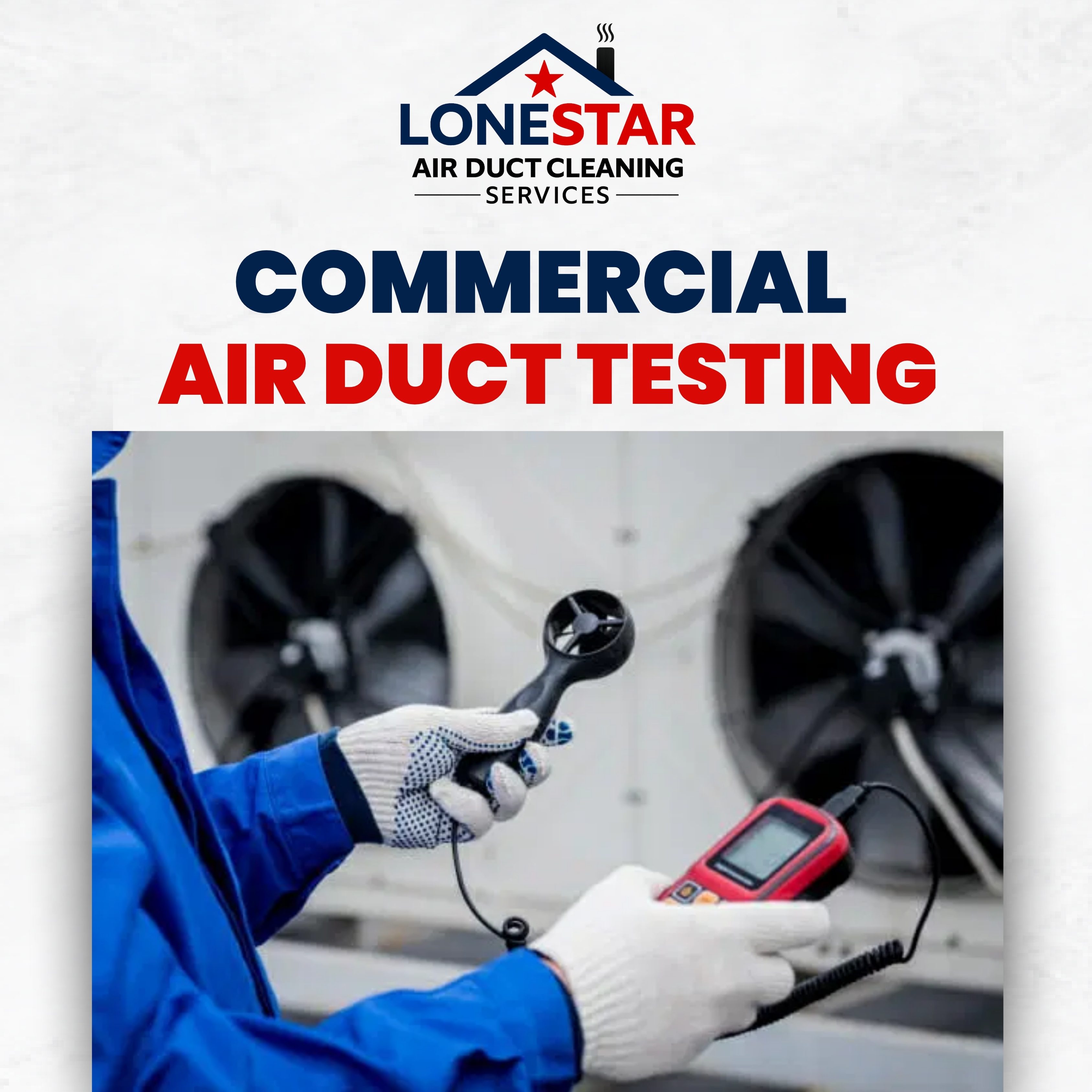
Then we inspect accessible areas. That may include returns, supply registers, mechanical rooms, rooftop unit connections when reachable, ceiling areas where access is safe, and visible duct sections. Testing can include airflow checks, pressure clues, visual inspection, photo notes, and targeted observations. The exact steps depend on the building and safe access.

Common duct system check points

Commercial duct systems can be simple or complicated. A small office near 6th Street North may have a few zones. A larger building near Emmett F Lowry Expressway may have several units feeding different areas.

Area checked What we look for
Supply vents Weak airflow, dust trails, blocked grilles, uneven delivery
Return vents Heavy dust, poor filter fit, restricted air path
Duct access points Visible debris, moisture clues, loose connections
Mechanical areas Filter condition, leakage clues, dust around equipment

The table does not cover every possible item. It shows the usual starting points. Every building has its own quirks. Some buildings have a mystery closet that nobody opens. We open it if access is safe and approved. Sometimes that is where the plot thickens.

How testing helps before cleaning

Air duct cleaning can be useful when the duct system has visible buildup or debris. Testing helps decide what is actually going on first. Without testing, a business may clean ducts when the main issue is a blocked return path. Or a tenant may blame ducts when a supply vent is closed above a ceiling tile.

  • Whether visible buildup is present inside accessible ducts
  • Whether complaints are tied to one area or the whole building
  • Whether airflow is weak at certain vents
  • Whether filters are sealing properly
  • Whether dust is entering from ceiling cavities
  • Whether moisture clues need attention
  • Whether duct sections are damaged or disconnected
  • Whether cleaning is likely to be part of the next step

A practical example is a shop near Palmer Highway with dust on shelves every morning. A duct test may find dirty returns, poor filter fit, and dust entering from a storage room door that stays open to the back. Cleaning may still be useful, but the test gives a clearer picture.

Signs of duct leakage or airflow trouble

Duct leakage and airflow trouble can show up in small ways before they become a bigger headache. If testing shows that the layout no longer fits the building, Commercial Air Duct Installation in Texas City, Texas or related HVAC review may be part of a larger conversation.

  • Ceiling tiles moving when the system starts
  • Whistling sounds near vents
  • Streaks of dust around registers
  • Doors that feel pressure pulled
  • Rooms that never match the thermostat
  • Dust lines near ceiling gaps
  • Return grilles with heavy buildup
  • Hot offices next to cold offices
  • Staff using desk fans year round

In Texas City, many commercial buildings have been changed over time. A former retail space may become a clinic. A storage room may become an office. A wall may be added, but the airflow plan may not be updated. Air is lazy. It takes the easiest path, like most of us after a long day on I 45.

Lone Star Air Duct Cleaning Services

Odor complaints and duct testing

Testing can help track odor patterns, although odor work can require more than one type of check. The duct system may be the source, the pathway, or just the messenger. Testing helps sort that out.

  • Moisture near ducts or coils
  • Dust buildup
  • Dirty filters
  • Drain pan issues
  • Nearby plumbing problems
  • Stored chemicals or cleaning supplies
  • Outside air intake locations
  • Roof work materials
  • Pest activity
  • Food service areas
  • Floor drains

A restaurant near Bay Street may have kitchen odors moving into a dining area. An office near FM 1764 may smell musty after heavy rain. A warehouse office may pick up smells from nearby storage. Sometimes it takes building staff, HVAC service teams, and cleaning crews working from the same information.

Testing after construction or remodeling

Commercial remodeling often leaves dust where nobody expects it. Even careful projects can move drywall dust, sawdust, ceiling tile particles, insulation fibers, and debris into returns or around vents. Testing is common after tenant build outs, ceiling tile replacement, wall changes, flooring work, roof repairs, HVAC replacement, painting, sanding, fire cleanup, water cleanup, equipment moves, and new office layouts.

A common Texas City scenario is a strip center space changing use. A salon becomes an office. A small store becomes a medical suite. The HVAC ducts may still be arranged for the old layout. If the system has reached the point where sections need to be changed out, Commercial Air Duct Replacement in Texas City, Texas may be part of the discussion after testing identifies the concern.

Industrial and warehouse spaces

Texas City has many properties tied to logistics, marine work, plants, repair shops, storage, and industrial support. These buildings often mix large open spaces with offices, break rooms, locker rooms, and control areas.

  • Office airflow near warehouse doors
  • Dust entry from shop areas
  • Return locations near production spaces
  • Filter fit and change patterns
  • Odors from nearby storage
  • Duct condition above drop ceilings
  • Comfort complaints in break areas
  • Air movement between clean and dusty zones

A warehouse office near Loop 197 may have a return grille too close to a door that opens into the shop. Every time the door opens, dust gets a free ride. Testing helps spot that type of problem. These jobs may require coordination with site rules, access times, and safety procedures.

What to do before the visit

A little prep can make testing smoother. Before Lone Star Air Duct Cleaning Services arrives, it helps to make a short list of problem rooms, note when complaints happen, find recent filter change records if available, clear access to mechanical rooms, and share any recent construction or water event history.

  • Make a short list of problem rooms
  • Note when complaints happen
  • Find recent filter change records if available
  • Clear access to mechanical rooms
  • Let tenants know testing may happen near vents
  • Point out roof access rules if rooftop units are involved
  • Share recent construction or water event history
  • Keep normal HVAC operation if possible

You do not need to scrub vents or rearrange the whole building. We need to see real conditions. If a return grille looks dusty every Tuesday, let it be dusty. It is evidence, not a character flaw.

What can affect results and timing

Commercial air duct testing depends on building access, system layout, and current conditions. Some visits are simple. Others take more time because the building has multiple units, locked areas, tenant schedules, or limited ceiling access.

  • Number of HVAC units
  • Number of floors or tenant spaces
  • Access to roof units
  • Ceiling height
  • Locked mechanical rooms
  • Active business hours
  • Recent filter changes
  • Recent cleaning
  • Weather and humidity
  • Ongoing construction
  • System running schedule
  • Safe access to duct areas
  • Building age and past renovations

Heavy rain, strong coastal humidity, or a roof access delay can change the order of the work. Texas City weather likes to keep everyone humble. We plan carefully, but we also adjust when the building or weather calls the shots.

What your team receives after testing

After testing, your team receives practical findings. The format can vary by project, but the goal stays the same. You need clear information that helps with next steps.

  • Areas checked
  • Photos where useful
  • Airflow observations
  • Visible dust or debris notes
  • Filter condition notes
  • Moisture or staining observations
  • Access limits
  • Rooms with stronger or weaker airflow
  • Suggested next steps for cleaning or HVAC review

We write for real people. A property manager should not need a decoder ring to understand the notes. If duct cleaning appears to be part of the answer, we explain where and why. If access was limited, that gets noted too.

Commercial and residential testing differences

Commercial systems are often larger, busier, and more varied than home systems. They may run longer hours and serve more people. They may also have more access limits.

  • Multiple rooftop units
  • Shared tenant spaces
  • Larger return systems
  • Drop ceilings
  • Zone controls
  • Maintenance staff coordination
  • Business hour planning
  • Lease or tenant concerns
  • Health and comfort complaints from many people

Residential testing usually focuses on a single household and a smaller system. Commercial testing often means more voices in the room. A tenant says one thing. Maintenance says another. The owner wants documentation. Testing helps bring those concerns into one set of observations.

Texas City buildings that commonly need this service

Texas City has a mix of older buildings, newer commercial spaces, coastal properties, industrial sites, and retail centers. That mix creates many duct testing needs.

  • Older office buildings near 6th Street with aging duct runs
  • Retail stores near Palmer Highway with ceiling dust
  • Clinics near Mainland Medical areas with room comfort complaints
  • Restaurants near Bay Street with odor movement concerns
  • Warehouses near Highway 146 with dusty office returns
  • Churches near residential streets with uneven airflow in meeting rooms
  • Tenant spaces near Emmett F Lowry Expressway after remodeling
  • Service shops near Loop 197 with dust transfer concerns
  • Properties near the Texas City Dike affected by moisture and salt air

Even nearby residential style commercial spaces can need testing. Leasing offices, clubhouses, small care offices, and mixed use spaces may have duct systems that work like a home system but serve public or staff areas all day. You can also review the Texas City, Texas service areas page for local coverage details.

Coastal weather and duct concerns

Texas City sits close to Galveston Bay, and that matters. Moisture and salt air can be tough on buildings. After a stormy stretch, some businesses notice odors when the HVAC starts. After dry windy days, dust may show up near returns.

  • Musty odors
  • Condensation near vents
  • Staining around registers
  • Faster grime buildup on grilles
  • Corrosion clues near metal parts
  • Filter loading during windy periods
  • Dust movement after storms
  • Comfort swings during humid days

Testing does not control the weather. If it did, we would all vote for less humidity. It does help document how the building is responding. If insulation near duct areas is part of the broader concern, Commercial Attic Insulation in Texas City, Texas may be reviewed as a separate service need.

When only one room has a problem

A single room complaint is common. It can still be worth checking because the cause may be simple or hidden. In a Texas City office, a conference room may feel fine at 9 a.m. and stuffy by noon. The issue may not be the entire duct system.

  • A closed damper
  • A blocked supply vent
  • Furniture covering airflow
  • A weak return path
  • A duct connection issue
  • A thermostat location problem
  • Heat from equipment
  • Too many people for the air supply
  • Ceiling cavity air movement
  • Poor filter fit affecting the zone

Testing helps separate the idea that the whole system is bad from the more practical possibility that one room needs closer attention.

When the building has multiple tenants

Multi tenant buildings need clear communication. Airflow complaints can cross walls, and duct paths do not always match lease lines. A strip center in Texas City may have a nail salon, office, restaurant, and retail shop in the same row. Each space has different smells, schedules, filters, and door traffic.

  • Shared returns
  • Odor transfer between units
  • Dust complaints after tenant work
  • Uneven airflow between suites
  • Vents added or removed during past build outs
  • Ceiling access limits
  • Confusion over which unit serves which area

Testing can help identify where the duct concerns appear and where follow up may be needed. We coordinate with the site contact so tenants know what is happening. That keeps the day from turning into a hallway guessing game.

How often to consider commercial air duct testing

There is no single schedule that fits every building. Testing is often requested when there is a complaint, a change, or a need for documentation. Some properties use testing as part of periodic facility review, while others call only when there is a clear issue.

  • Before a tenant moves in
  • After remodeling
  • After water intrusion
  • After repeated odor complaints
  • When dust returns quickly
  • When airflow feels uneven
  • Before planning duct cleaning
  • After HVAC equipment changes
  • When maintenance records are unclear
  • When staff complaints keep coming back

The key is to test when the findings can help someone make a practical decision. If the concern involves ongoing upkeep rather than a one time issue, Commercial Air Duct Maintenance in Texas City, Texas may also be worth discussing.

What to avoid before testing

Try not to hide the symptoms before the visit. We know it is tempting to clean every vent before someone arrives. But if dust patterns matter, we need to see them.

  • Replacing filters right before the visit unless needed for operation
  • Wiping dust trails from vents
  • Closing vents to balance a room
  • Masking odors with sprays
  • Moving complaints to a different room without noting it
  • Blocking access to mechanical areas
  • Turning off systems without telling the tester

If something must be changed before we arrive, just let us know. Real buildings are busy. We can work with that.

Why choose this team for Texas City

About Us gives more background on the company and team. Lone Star Air Duct Cleaning Services is based in Houston and serves Texas City businesses with air duct and dryer vent cleaning services, including commercial duct testing. We understand Gulf Coast building conditions, long workdays, tenant needs, and the need for straight answers.

  • Listen first
  • Inspect accessible areas
  • Test where conditions allow
  • Document what we observe
  • Explain findings in plain language
  • Suggest practical next steps when appropriate

We do not talk over your team. We do not make the visit harder than it needs to be. If your building is near the Port of Texas City, Texas City Dike, College of the Mainland, Mainland City Centre, Palmer Highway, or Highway 146, we can help you plan a duct testing visit that fits your site needs.

ZIP codes served around Texas City

For commercial air duct testing in Texas City, common local service ZIP codes include 77590, 77591, 77592, 77568, 77539, 77510, and 77563. These ZIP codes cover Texas City and nearby business areas where many property teams manage offices, shops, warehouses, clinics, restaurants, and shared commercial spaces.

What happens after the results

After you review the findings, your next step depends on what the testing shows. Sometimes the answer is simple. A blocked return gets cleared. A dirty grille gets cleaned. A filter rack gets corrected. Other times, the building needs input from an HVAC contractor, property manager, and cleaning team.

  • Commercial air duct cleaning
  • Filter fit correction
  • HVAC service review
  • Return air path adjustments
  • Moisture source review
  • Vent cleaning
  • Tenant coordination
  • Follow up inspection after repairs
  • Better access planning for future maintenance

If the property includes laundry areas or vented equipment, testing discussions may also point to Commercial Dryer Vent Booster Fan Installation in Texas City, Texas as a separate service need. Testing gives everyone a shared starting point, and that alone can save a lot of back and forth.

Related services in Texas City, Texas

Schedule commercial air duct testing in Texas City

If your Texas City business has dust concerns, airflow complaints, odor questions, or post construction duct concerns, Lone Star Air Duct Cleaning Services can help with practical commercial air duct testing. Use Contact Us to schedule a visit or call (830) 430-1849.

Frequently Asked Questions (FAQs)

Commercial air duct testing is an evaluation of a building’s HVAC ductwork and related airflow/condition indicators to help identify potential issues that may affect indoor comfort and ventilation. Many local businesses request it as part of routine facility maintenance or before making HVAC decisions.

Frequency depends on the building type, occupancy, operating hours, and HVAC usage. Many facilities consider testing during regular maintenance cycles or when there are noticeable changes in airflow, comfort, or operational needs.

Offices, retail spaces, warehouses, medical and dental offices, schools, restaurants, and multi-tenant buildings often consider testing to better understand duct performance and HVAC conditions.

Common reasons include uneven temperatures, persistent dust, odor concerns, inconsistent airflow, frequent HVAC complaints from occupants, or after renovations that may have introduced debris into the system.

No. Testing focuses on assessing duct-related performance or conditions, while cleaning focuses on removing accumulated dust and debris. Lone Star Air Duct Cleaning Services offers a range of services including Commercial Air Duct Testing, and can discuss what approach may fit your situation.

It’s often planned to minimize disruption, such as coordinating access to mechanical areas and scheduling around business hours when possible. The level of disruption varies by building layout and access points.

Coastal conditions can influence HVAC operation and indoor comfort. Some property managers choose testing as part of broader HVAC upkeep to better understand how the system is performing under local conditions.

Helpful items include basic building information, HVAC equipment locations, known comfort complaints, and any recent maintenance or renovation notes. Access to relevant mechanical rooms and ceiling/duct areas may also be needed.

Testing can provide general insights that support indoor air quality discussions, such as identifying areas where airflow or system conditions may warrant further attention. It’s commonly used alongside other HVAC and facility maintenance considerations.

Lone Star Air Duct Cleaning Services serves the area and offers a range of services including Commercial Air Duct Testing, along with other duct and HVAC-related services, to help businesses evaluate their systems and plan next steps.

What Is Duct Leakage Testing, and When Is It Worth Scheduling?

What Is Duct Leakage Testing, and When Is It Worth Scheduling?

Duct leakage testing measures how much heated or cooled air escapes from ductwork. It can…

Air Duct Repair vs Replacement for Aging Ductwork

Air Duct Repair vs Replacement for Aging Ductwork

Compare air duct repair and replacement by looking at the damage, leakage, insulation, moisture, airflow,…

Why Does My House Get Dusty Right After I Clean? Duct Questions to Consider

Why Does My House Get Dusty Right After I Clean? Duct Questions to Consider

Dust that returns fast may come from filter gaps, leaks, recent work, or duct debris.…